Container shape
Flat, oval, square, round and rectangular packs each need the right handling, guides and pressure control.
Front & back labelling machines UK
Lancing UK supplies automatic and compact front/back labelling systems for bottles, jars, flat containers, cartons and retail-ready packs. Configure around your product shape, label material, output target and available line space.
Machine range
Choose the machine route that matches your speed, available space, container shape and label placement requirement.
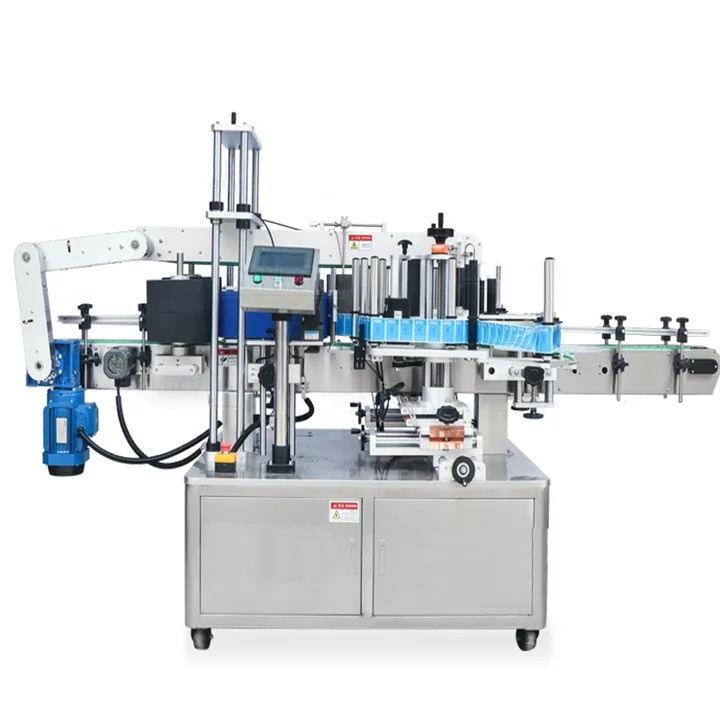
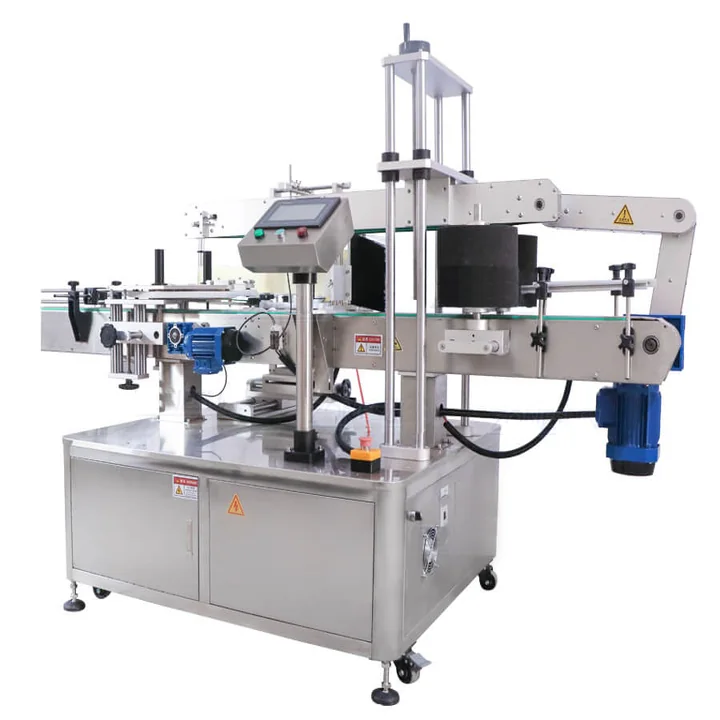
Automatic front and back labelling machine for flat, oval, square and round containers requiring simultaneous twin-side label application.
View machine →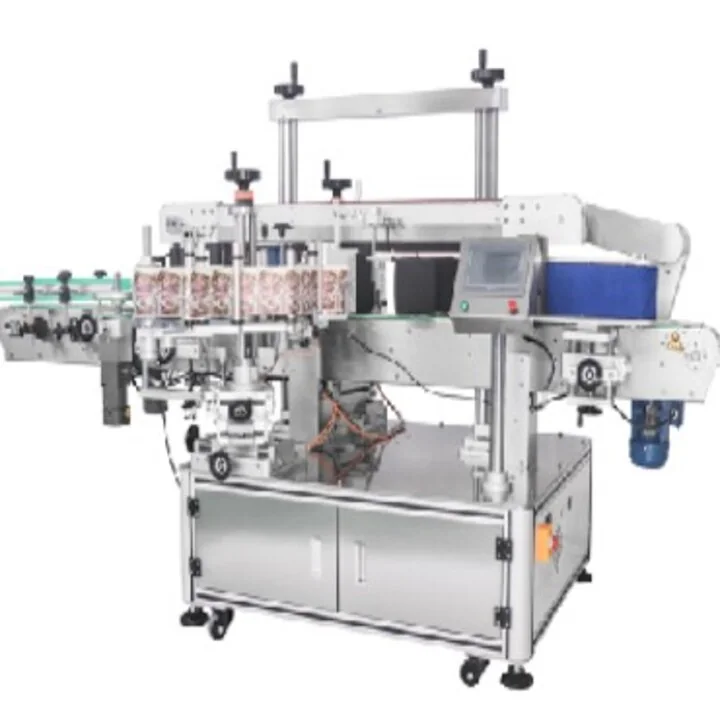
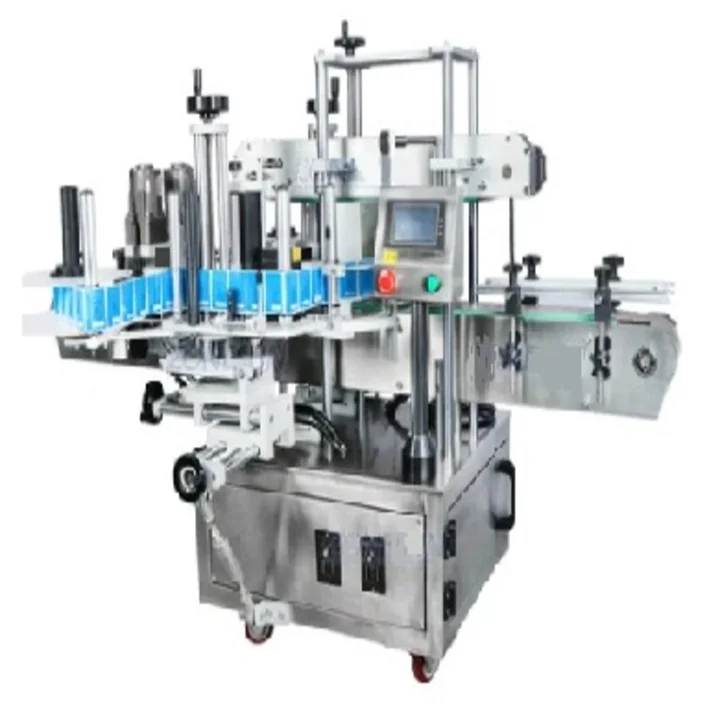
Compact twin side labelling system for lower-volume production, product trials and factories needing front/back label application in a smaller footprint.
View machine →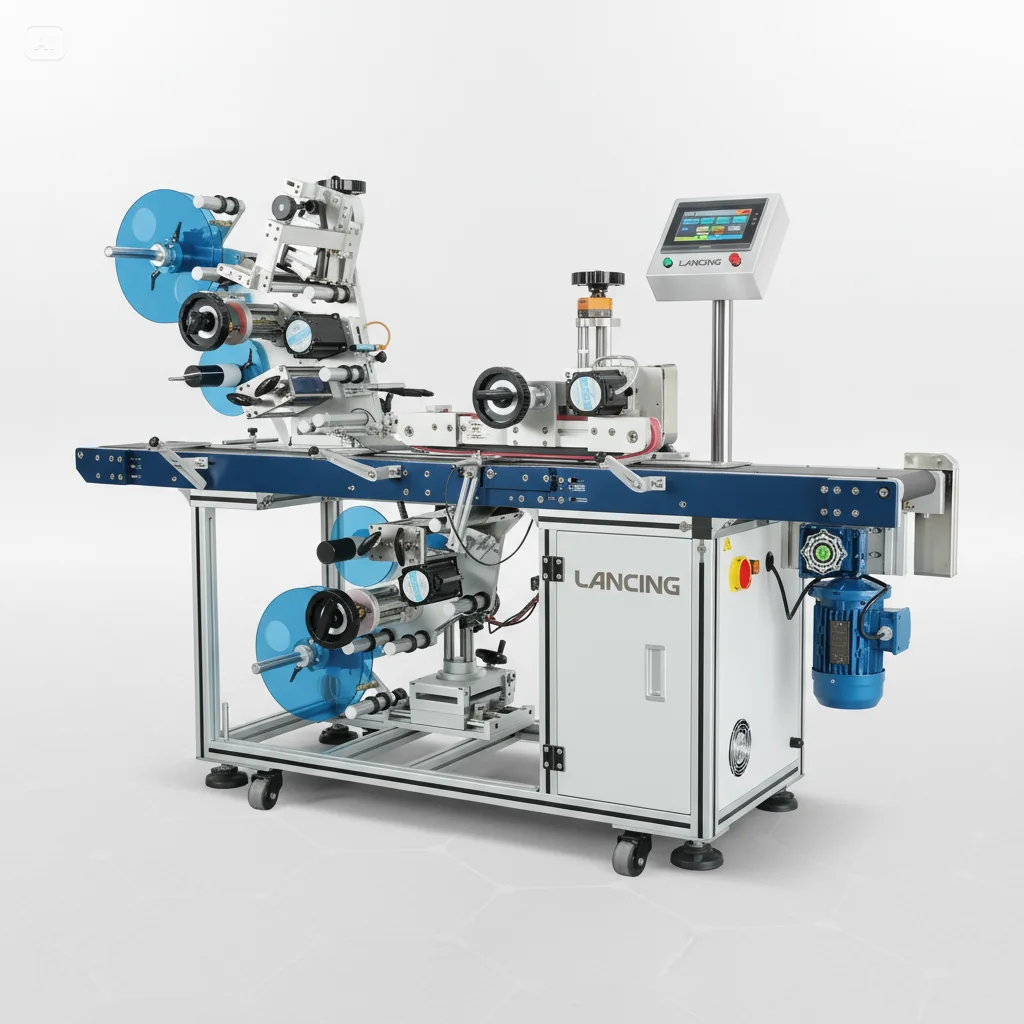
Automatic top and bottom labelling machine for flat products, boxes, trays, sleeves, cartons and packs needing labels on both faces.
View machine →Why front & back labelling matters
Front and back labelling is used where brand, ingredient, compliance, barcode or product information must be applied cleanly to two sides of the same pack. The correct machine depends on container stability, label material, label registration, conveyor handling and speed.
Selection support
A reliable label finish comes from matching the machine to the container, label and line conditions.
Flat, oval, square, round and rectangular packs each need the right handling, guides and pressure control.
Paper, film and clear labels can require different sensors and setup methods for consistent registration.
We can plan conveyor height, coding, inspection and interfaces with filling or capping equipment.
Applications
Use the pack format to narrow down the correct machinery route before requesting a quote.
Cosmetic, chemical and household bottles that need clear front branding and rear product information.
Stable twin-side application with guide adjustment and pressure control for shaped packs.
Front/back placement with container control where wrap-around labelling is not the desired finish.
Top and bottom labelling for sleeves, trays, boxes and retail-ready packaging.
Quick answers
A front and back labelling machine applies two labels to opposite faces of a container. It is commonly used for flat, oval, square and selected round bottles where front branding and rear product information must be positioned consistently.
Yes. Twin-side systems use two independent label heads so the front and back labels can be applied during one pass through the machine.
Clear labels can be supported when the correct sensor and setup are specified. Send label material, gap, backing and container details so compatibility can be checked.
Send container dimensions, label size, label material, target output, required label position, product photos or drawings, and details of any filling, capping, coding or inspection equipment that must connect to the labeller.
Popular searches
These pages help buyers find the correct machine route for the container shape, label type and production environment.
For rectangular, flat-sided and shaped bottles needing front branding and rear information labels.
For oval and rounded containers where guide control and pressure settings matter.
Planning notes for transparent labels, film labels and sensor selection.
What affects the budget for compact and automatic front/back labelling systems.
Send the container size, label size, target speed and a photo of the pack. Lancing UK can help confirm the most suitable machine route.
Engineering selection guide
Repeatable front and back label placement depends on how the pack is presented to two independent label heads. Container geometry, side-belt pressure, label-roll data and the agreed measurement method all need to be considered together.
A front and back labelling machine normally carries one applicator on each side of the conveyor. The two label heads can be positioned independently, allowing a branding label and an information label to have different sizes and vertical positions. The pack must remain upright, correctly oriented and stable while both labels are dispensed and wiped onto the surface.
Flat and rectangular packs often provide a clear panel for each label. Oval or tapered containers need more careful guide and pressure settings because the point of contact changes across the surface. Side belts, product guides and an optional top hold-down can reduce rotation or rocking, but the correct arrangement should be confirmed with production samples.
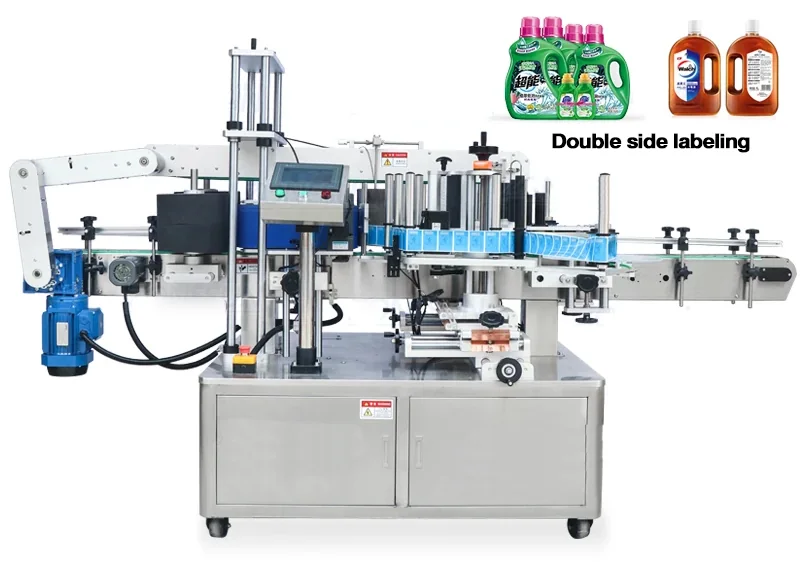
Existing labelling-machine photograph. Confirm guides, belt positions and label-head settings using the real pack and production label rolls.
The enquiry should describe the complete application rather than only the container width or a desired bottles-per-minute figure.
| Container | Shape, dimensions, material, weight, rigidity, taper, cap or closure, and whether the pack is full at the labelling stage. |
|---|---|
| Front and back labels | Finished label dimensions, required position, separation between labels, material, adhesive, artwork orientation and any barcode or mandatory information. |
| Label roll | Core diameter, outside roll diameter, backing-paper width, label gap, pitch and inside- or outside-wound direction. |
| Sensing | Opaque paper and film labels may use conventional gap sensing; transparent constructions can require a clear-label sensing option and a sample trial. |
| Placement evidence | State the allowed horizontal and vertical tolerance, the measurement datum and the sample size used for acceptance. |
| Line conditions | Normal running speed, upstream filler or capper, conveyor height, coding, inspection, accumulation and available floor space. |
Choose the application face
The label layout determines the machinery route. Selecting the wrong application method can create avoidable handling, registration and changeover problems.
Two separate labels on opposite faces of flat, oval, rectangular, square or selected round containers. Compare the automatic twin-side labeller and compact twin-side labeller.
A single label around a cylindrical bottle, jar or can normally belongs on the dedicated wraparound labelling machinery route rather than a twin-side machine.
Labels applied to upper and underside faces of cartons, trays, sleeves and flat packs. See the automatic top and bottom labeller.
Projects needing a third side, corner wrap, barcode print-and-apply or unusual orientation should be reviewed as a separate handling application. For variable-data carton or case labels, use the specialist print-and-apply route.
Send representative containers, a production label roll, drawings or dimensions, photographs of the intended label positions and the normal line-speed requirement. Include the pack condition at the labeller, the required placement tolerance and any coding or inspection interface. Lancing can then compare the machine route against the real application instead of relying on a generic model description.
Application qualification
A useful machine comparison separates the finished label presentation from the engineering needed to hold, sense and transfer the pack. This avoids treating every two-label project as the same application.
Mark the front, back and any additional panel on a photograph or drawing. Include label orientation, required edge clearances, barcode direction and areas that must remain free of labels.
State whether the container reaches the labeller filled or empty, capped or uncapped, dry or recently washed. Weight, centre of gravity, flexibility and closure overhang can change the handling method.
Front and back labels can use different sizes, materials and winding directions. Record label pitch, gap, web width, core size, outside roll diameter, liner and whether clear-label sensing is required.
Define how placement will be measured, the speed to be demonstrated, the sample quantity and whether starts, stops, changeovers, coding and inspection are included in acceptance.
The same information can be used to shortlist a compact or automatic machine, prepare a sample trial and define the final handover evidence.
| Pack drawing or photographs | Show the usable front and back panels, shoulder and heel transitions, taper, mould seams, handles, caps and any datum used to locate the labels. |
|---|---|
| Representative containers | Provide normal production samples, including the lightest or least stable format and any size that creates a difficult changeover. |
| Production label rolls | Use the intended face stock, adhesive, liner, gap and winding direction. Artwork samples alone do not confirm sensor or dispense behaviour. |
| Output requirement | Separate the desired line rate from the rate that must be sustained with normal product spacing, operator loading and downstream equipment. |
| Placement acceptance | Define horizontal and vertical measurements from fixed pack datums. Record both heads separately and include normal starts, stops and recipe changes. |
| Line interfaces | Confirm conveyor height and direction, upstream product spacing, coding, inspection, rejection, accumulation and the control signals required between machines. |
This range covers front and back, twin-side and related multi-face applications. A single continuous label around a cylindrical container belongs on the wraparound labelling route, while variable-data labels printed and applied to cases or cartons belong on the print-and-apply route.
For two discrete labels on opposite faces, compare the automatic twin-side labeller with the compact twin-side labeller. For upper and underside labels, use the top and bottom labelling machine.
Technical resource centre
Use these final-stage guides when the application needs a third label face, heavy container handling, inspection, acceptance testing or structured fault finding.
Plan a third label head, application order and product control.
Assess filled weight, handles, recessed panels and large labels.
Define samples, measurements, fault recovery and handover evidence.
Specify finished-pack checks, camera views and pack tracking.
Diagnose drift, skew, missing labels, wrinkles and sensor faults.
Review taper, radii, mould seams, recesses and usable label area.
Follow the label path from unwind roll to finished application.
Control formats, recipes, training, spares and acceptance records.
Buyer questions
These questions help separate a nominal machine match from a configuration that can be tested against the real pack, labels and production line.
Two bottles can share the same height and width yet behave differently because weight, wall stiffness, taper, panel radius, closure shape and surface finish affect how they travel between guides and application belts. Nominal dimensions start the selection process, but representative samples are needed to confirm pressure, orientation and wipe-down settings.
The useful comparison is therefore the complete labelled pack, not the outline dimensions alone.
Yes. Label width, length, material, transparent areas, edge margins and the position of barcodes or variable print can influence sensor choice, peel-plate position, wipe-down and the usable container panel. Artwork also determines whether the front and back labels need separate datums or different application-head settings.
Early drawings can be used for planning, but final acceptance should use production-equivalent rolls.
A provisional machine route can be selected before final artwork when the maximum and minimum label sizes, material family, reel construction and intended positions are known. Final head capacity, sensing and acceptance conditions should not be signed off against an assumed label that may later change.
Supply the latest drawings and mark every dimension that is still provisional so the quotation states its assumptions clearly.
Future flexibility is limited by the physical adjustment range of the conveyor, guides, side belts, hold-down devices and label heads, together with the sensor and label-roll capacities. A new format may fit through the conveyor but still place the label outside the head travel or require a different stabilisation method.
Include realistic future packs in the original format-range review rather than relying on a broad “adjustable” description.
Inspection should be considered when a missing, duplicated, misplaced or unreadable label must be detected automatically rather than by periodic operator checks. The project must define the defect, inspection point, decision timing, reject method and confirmation that the failed pack actually left the good-product flow.
A camera specification should follow the acceptance requirement; it should not be added simply because “vision” is available.
Early project decisions
Two front and back projects can use the same bottle and label count but need different machinery because the labels are supplied differently or the pack reaches the labeller in a different condition.
Compare sequential front/back labels on one liner with separate front and back rolls on independent application heads.
Choose the label point from pack rigidity, surface condition, temperature, closure geometry and the surrounding line.
Use representative containers, both label rolls, the intended fill condition and an agreed placement method so the trial tests the real process.
Specification depth
Three details can change the project scope even when the container and label shape remain the same.
Place QR Codes with GS1 Digital Link or GS1 DataMatrix on a stable label panel and define print, inspection and reject requirements.
Calculate theoretical throughput from conveyor speed and product pitch, then test the real bottleneck and sustained good output.
Include guarding, isolation, emergency response, training, inspection and modification control in the site-specific installation review.
Further technical guidance
Two practical decisions can change the machine specification: how a layered label feeds and how the line recovers when either label roll ends.
Review thickness, opening tabs, sensing and finished-pack checks before selecting the label application route.
Review extended-content applicationDefine roll-end response, incomplete-pack control and first-off approval after restarting a twin-side line.
Plan material-change recoveryAssess conveyor, access and control interfaces before deciding which parts of a labelling line can be retained.
Review the retrofit scopeSensor selection · Label-roll specification · Send an application enquiry
Supply the container variants and production labels, including roll direction and registration requirements. Define the acceptable position of both labels relative to the pack and to each other. Trial container alignment, spacing and changeover, checking creasing, skew and label handling at the intended production rate.
Related guidance:
For a front-and-back labelling project, an acceptable front label is only half the specification. Show where the rear label belongs relative to the container and to the front label. Mark the intended top edges, centre lines and spacing on a finished pack, and identify any mould seam, handle or embossed feature that defines its orientation.
Keep front and rear label information separate in the enquiry. Record the artwork reference, size, stock, liner and winding direction for each roll. If the labels alternate on one roll, show the actual sequence and ask whether the proposed application route supports it. The machine layout should follow the finished-pack requirement and label supply arrangement.
Compare the container formats that are difficult to present, not just the largest and smallest dimensions. A flat bottle, an oval pack and a round container with two panels can have different orientation requirements. Ask for the proposed guiding and application method to be identified for each format before grouping them into a common changeover.
Supply both labels and a marked container. Rear-label dimensions, the required relationship between panels and the chosen roll arrangement are part of the application requirement and should be assessed together.