Front & back labelling machinery from Lancing UK01494 623015 · sales@lancinguk.com

Label supply comparison

Single-roll versus twin-head front and back labelling

A front and back label pair can be supplied and applied in two fundamentally different ways. Compare the pack handling, label-roll and acceptance implications before the artwork and machine route are fixed.

Diagram comparing alternating front and back labels on one reel with separate twin application heads

Direct answer

A label pair can use one alternating reel or two independent reels and heads

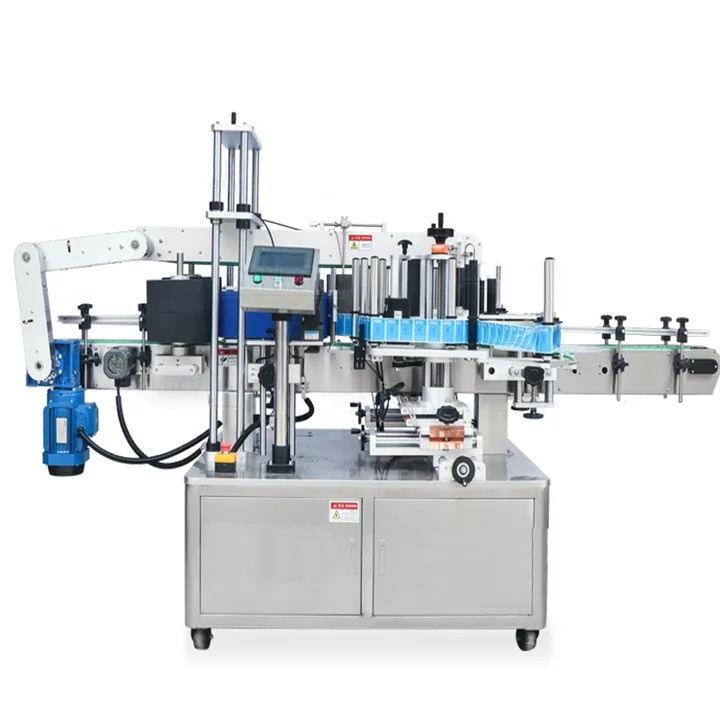
An alternating-reel system presents the front and back labels in a fixed sequence on one liner and dispenses them through one applicator while the product remains under controlled handling. A twin-head system uses separate front and back label rolls on opposed applicators, allowing each face to be set independently during one conveyor pass. The correct route depends on pack geometry, output, label construction, changeover and inspection needs.

Label supplyFront and back labels alternate in a controlled sequence on one liner.Front and back labels are supplied on separate rolls.
Applicator arrangementOne applicator dispenses the two labels sequentially while the pack is held or rotated as required.Two opposed applicators dispense to separate faces, normally during the same conveyor pass.
Pack handlingOften considered where the product can remain captured for a repeatable sequential application.Often considered for flat, oval, rectangular or shaped packs travelling through an inline twin-side system.
Label independenceSequence, pitch and converter setup link the two labels together on one reel.Each roll can be loaded, sensed and adjusted separately, subject to the selected head capacities.
InspectionInspection must confirm the alternating sequence and the position of both labels.Presence, position and print checks can be assigned to each face independently.

Operating principle

How the two label-supply routes work

The number of labels on the pack does not by itself decide the number of reels or applicators. Product motion and label presentation must be specified together.

How an alternating-reel route works

The label converter places the front and back designs in a repeating order on one backing web. The labeller detects and dispenses each label in sequence. The product must remain controlled long enough for both positions to be established, and the machine recipe must match the label order, gap, pitch and intended angular or panel relationship.

This can be a practical route for controlled round-container applications and some compact or semi-automatic processes, but the exact pack-handling method must be confirmed rather than assumed from the reel arrangement.

How a twin-head route works

One applicator presents the front label and a second presents the back label. The heads can normally be positioned and set independently within their adjustment ranges, so different label heights, lengths, materials or vertical positions may be accommodated when the selected hardware supports them.

The container still needs stable spacing, orientation and wipe-down. Two heads do not correct a pack that rotates, rocks or reaches the application zone with an uncontrolled surface.

Selection framework

When to compare one reel or two heads

  • Use the real pack shape and motion: cylindrical rotation, flat-panel transfer and oval-container control are different tasks.
  • Confirm whether the front and back labels have the same material, liner, thickness, gap and print process.
  • State whether the two labels will always be produced and changed together.
  • Include every operating mode: front only, back only, both labels and any future formats.
  • Define how missing, reversed or incorrectly positioned labels will be detected.
Important: a label reel description is not a machine specification. Lancing should review production-equivalent rolls, representative packs and the intended operating sequence before the application route is confirmed.

For a round bottle that needs one continuous label, compare the dedicated wraparound route rather than forcing a two-label architecture. For flat or oval packs needing two independent panels, compare the automatic twin-side labeller and the compact twin-side labeller.

Label converter brief

Information to confirm before labels are ordered

Artwork sequenceIdentify the first label seen by the sensor and the repeating front/back order.
Finished dimensionsGive the width and length of each design separately, including any difference between the two.
Pitch and gapRecord the repeat distance and the gaps around both labels rather than quoting only an average.
Web and reelState backing-web width, core diameter, outside roll diameter and inside- or outside-wound direction.
Material and sensingState face stock, liner, adhesive, transparent areas, metallic features and any registration mark.
Barcode and codingMark barcode orientation, variable-print area and the face that will be inspected.

Trial plan

Test the complete label sequence, not only one good pack

  1. Confirm the pack condition, orientation and handling method used in normal production.
  2. Load production-equivalent label rolls and verify the declared winding direction and sequence.
  3. Run enough consecutive cycles to expose a reversed label, missed gap, feed interruption or head-to-head mismatch.
  4. Measure front and back positions from named pack datums and record the two faces separately.
  5. Repeat starts, stops, reel changes and the most frequent product changeover.
  6. Include coding, inspection, rejection and downstream contact where they form part of the line.

Buyer questions

Questions about one-reel and two-head front/back labelling

Can the front and back labels have different sizes on one reel?

They may be able to, but the converter layout, pitch, sensor method and machine sequence must all support the two finished dimensions. The machine should be tested with the intended reel rather than assuming that any alternating artwork layout will feed correctly.

What happens if the alternating label sequence is reversed?

The machine can place the wrong design on the wrong face or lose the intended spacing. The approved reel specification should identify the leading label, winding direction and artwork orientation, and incoming rolls should be checked against that reference.

Can twin heads run different label materials?

Independent heads can allow separate rolls and settings, but suitability still depends on each face stock, liner, adhesive, sensor and wipe-down requirement. Both materials should be included in the same representative trial.

Which route is easier to change over?

There is no universal answer. One reel reduces the number of loaded webs but makes the front/back sequence a converter-controlled item. Two heads add a second reel path but provide independent adjustment. Compare the complete changeover task, not only reel count.
Send the real pack and label-roll plan

Lancing can compare alternating-reel, compact and automatic twin-head routes when the pack, both label designs, reel data, target output and intended line sequence are defined.

Call 01494 623015Get quote