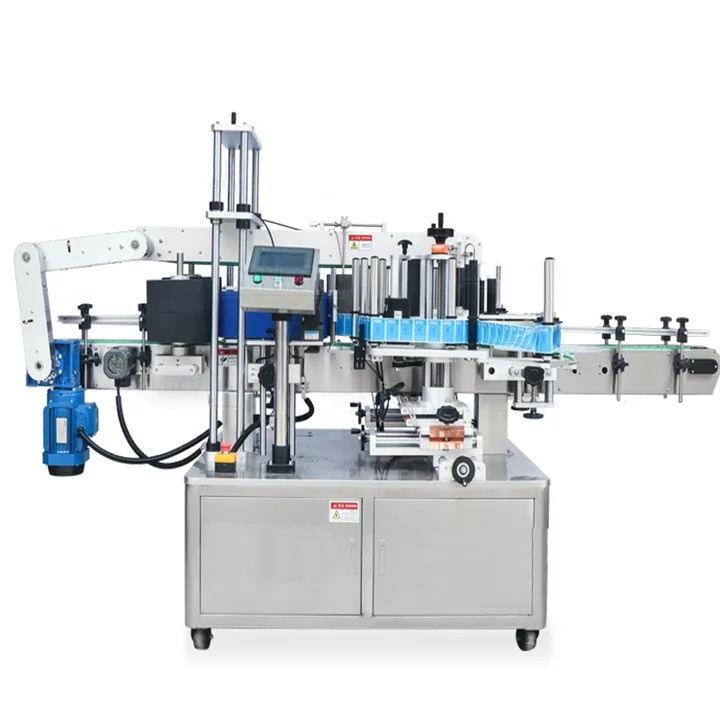
Does a filled bottle always label more accurately?
No. Added weight can improve stability, but a filled bottle can also flex, bulge, arrive wet or carry product residue. Accuracy depends on the complete pack, product-control method and surface condition at the application point.
It can only be confirmed after checking splash, condensation, temperature, bottle settling and conveyor transfer. If the usable panel is not clean and stable, extra dwell, wiping, drying or a different sequence may be required.
Does the cap affect front and back labelling?
Yes. A cap, pump or trigger can change the centre of gravity, container height and the space available for top hold-down or guides. Trials should use the fitted production closure where it is present at the labeller.
Should trial samples be empty or filled?
Use the condition that represents production, plus any credible worst-case format. Where safe sample product is not available, agree a representative fill weight and explain what the substitute does and does not prove.
What if the label panel is damp?
The cause and amount of moisture should be controlled before acceptance. A bottle may need extra drain time, drying or a different label point. Label material and adhesive suitability should also be confirmed with the label supplier.
Can the line sequence be changed later?
Possibly, but moving the labeller changes conveyors, controls, access, pack condition and inspection timing. Future options should be considered in the original layout rather than assuming the machine can be relocated without requalification.