Clarify the brief
A clear brief improves the quality of machine recommendations.
Pre-installation checklist
Before a new labelling machine arrives, the site should check access, space, power, air, conveyors, sample packs, operators and commissioning readiness.
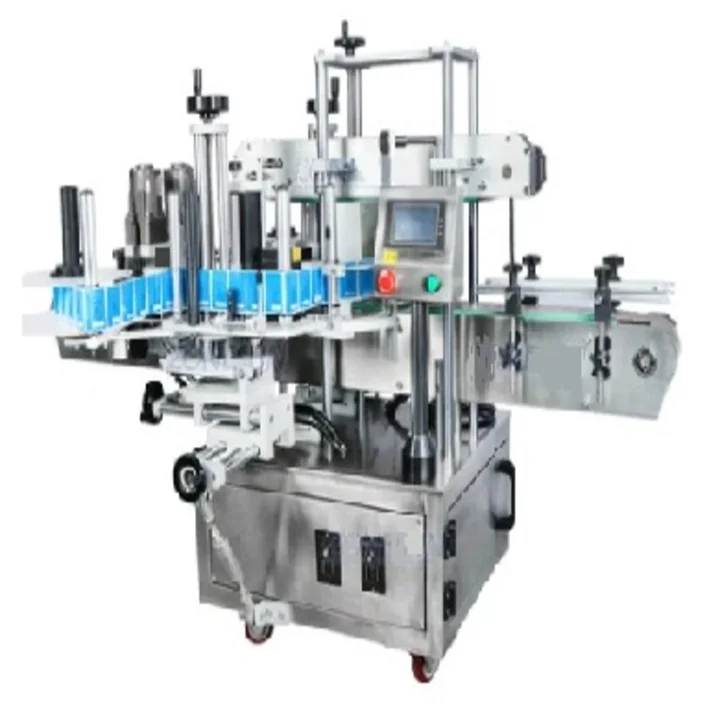
Selection intent
Early labelling machine research is most useful when it turns a broad idea into a clear technical brief. The aim is to reduce assumptions before a machine is shortlisted.
The strongest enquiries explain the product, pack, label, output and line context together. This makes it easier to compare suitable routes and avoid generic recommendations.
A clear brief improves the quality of machine recommendations.
Pack handling, label material and site layout can affect cost and suitability.
Installation, training and spares are part of the buying decision.
Machine routes
Most projects start with the pack shape, label position, material and output. These are the core machine routes to compare before requesting a quotation.
Best for established production where two labels need to be applied consistently in one pass.
Useful for smaller footprints, lower-volume production, trials and fast SKU changes.
Useful for flat packs, cartons, trays, sleeves and products requiring label application to upper and lower faces.
Quote preparation
Use the guide to collect the information that normally delays a quotation: pack sizes, label sizes, label material, output, available space and integration points.
When there is uncertainty, samples or short videos of the existing manual process can be more useful than a written description alone.
Related pages
These pages help connect the search route with machine type, application and buying guide intent.
Core checklist for quote preparation.
Main buying guide.
Compare machine families.
Send the brief to Lancing UK.
It is useful for production managers, operations teams, founders, contract packers and engineers preparing a labelling machinery enquiry.
No. The guide improves the starting brief, but unusual containers, clear labels and premium presentation projects may still benefit from sample testing.
Yes. Send the details through the contact form and Lancing UK can help compare suitable labelling machine routes.
Share the pack, label material, output target and any integration requirement. The team can help you compare the most suitable compact, automatic or top/bottom labelling route.
Site safety questions
These answers are general planning guidance. The employer and other dutyholders must use competent, site-specific assessment and the machine instructions.
The business that owns, operates or controls the work equipment has duties for its safe use in the workplace, while suppliers and installers provide relevant machine information and must meet their own responsibilities. The final site assessment must consider the actual layout, people, products, interfaces and operating methods.
See the HSE PUWER overview for dutyholder guidance.
It can. An add-on may introduce new nip points, access needs, electrical or pneumatic energy, moving reject parts, altered guarding or a different intervention routine. The integrated line should be reviewed as a complete system rather than treating each module as isolated.
Record who is responsible for the modification, validation, instructions and operator training before the revised line is used.
The required isolation depends on the machine and task, but all energy capable of causing unexpected movement must be controlled under the site procedure and manufacturer instructions. Electrical, pneumatic, stored mechanical and conveyor energy may all be relevant.
HSE guidance states that maintenance must be planned and equipment made safe before work begins; see maintenance of work equipment.
Yes. A smaller footprint does not remove hazards from moving belts, rollers, label-web drives, conveyors or unexpected start-up. The assessment should consider normal operation, roll changes, cleaning, adjustment, jam clearing and maintenance.
Use the actual installation and intended operators; do not assume that tabletop or compact equipment is automatically low risk.
UK dutyholder checks
For workplace use in Great Britain, the final installation needs a site-specific assessment of the actual machine, line interfaces, operators and tasks. Supplier documentation supports that process but does not replace the employer’s duties for safe use, inspection, maintenance, information and training.
| Before first use | Confirm the installed machine and connected conveyors are inspected where safety depends on installation conditions, and close any commissioning actions before production. |
|---|---|
| Guarding and access | Review label-web drives, belts, rollers, conveyors, reject devices and other moving parts. Fixed or interlocked guards should suit the access frequency and prevent foreseeable contact. |
| Isolation and stored energy | Define safe isolation for electrical, pneumatic and stored mechanical energy during cleaning, web threading, jam clearing and maintenance. |
| Controls and emergency response | Check start, stop, emergency-stop, reset and restart behaviour across the integrated line, including what happens after a guard opens or a fault clears. |
| Information and training | Provide machine-specific instructions for normal operation, format change, cleaning, fault recovery and maintenance, with competence appropriate to each task. |
| Inspection and maintenance | Set risk-based inspection intervals, retain relevant records and keep guards, interlocks, emergency controls and reject devices in effective working order. |
| Modification and retrofit | Reassess changes to printers, cameras, conveyors, guards, controls or reject systems because they can introduce new hazards and alter existing safeguards. |
Authoritative starting points include the HSE PUWER overview, inspection of work equipment and maintenance guidance. Current designated machinery standards are published through GOV.UK.