Clarify the brief
A clear brief improves the quality of machine recommendations.
Throughput guide
Machine speed should be matched to the real product, label and operator process. This guide explains how to think about bottles per minute and practical throughput.
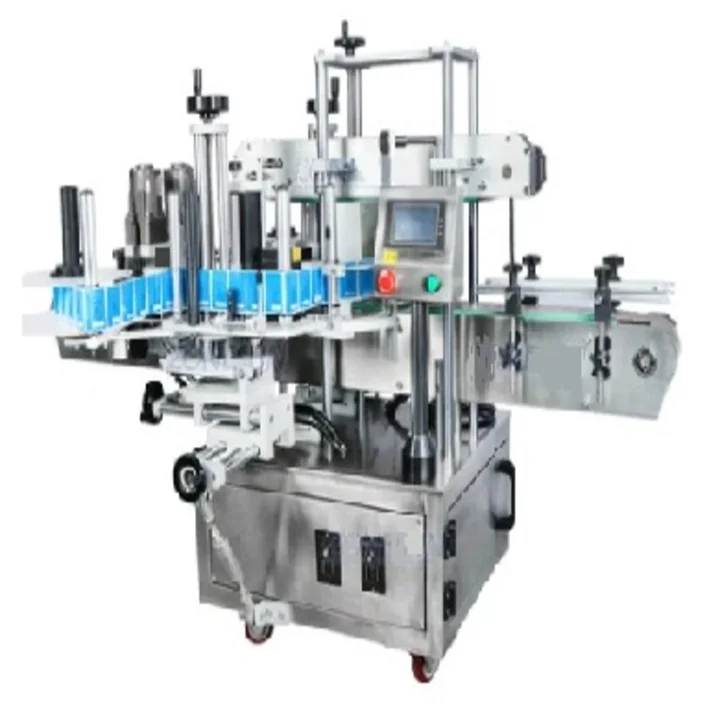
Selection intent
Early labelling machine research is most useful when it turns a broad idea into a clear technical brief. The aim is to reduce assumptions before a machine is shortlisted.
The strongest enquiries explain the product, pack, label, output and line context together. This makes it easier to compare suitable routes and avoid generic recommendations.
A clear brief improves the quality of machine recommendations.
Pack handling, label material and site layout can affect cost and suitability.
Installation, training and spares are part of the buying decision.
Machine routes
Most projects start with the pack shape, label position, material and output. These are the core machine routes to compare before requesting a quotation.
Best for established production where two labels need to be applied consistently in one pass.
Useful for smaller footprints, lower-volume production, trials and fast SKU changes.
Useful for flat packs, cartons, trays, sleeves and products requiring label application to upper and lower faces.
Quote preparation
Use the guide to collect the information that normally delays a quotation: pack sizes, label sizes, label material, output, available space and integration points.
When there is uncertainty, samples or short videos of the existing manual process can be more useful than a written description alone.
Related pages
These pages help connect the search route with machine type, application and buying guide intent.
Core checklist for quote preparation.
Main buying guide.
Compare machine families.
Send the brief to Lancing UK.
It is useful for production managers, operations teams, founders, contract packers and engineers preparing a labelling machinery enquiry.
No. The guide improves the starting brief, but unusual containers, clear labels and premium presentation projects may still benefit from sample testing.
Yes. Send the details through the contact form and Lancing UK can help compare suitable labelling machine routes.
Share the pack, label material, output target and any integration requirement. The team can help you compare the most suitable compact, automatic or top/bottom labelling route.
Output calculation
Theoretical products per minute can be estimated from conveyor speed and product pitch, but the sustainable line rate is set by the slowest repeatable operation across infeed, stabilisation, label dispense, inspection, rejection and downstream transfer.
Product pitch is the distance from the same point on one pack to the same point on the next pack. It includes the pack length in the direction of travel plus the working gap between packs. It is different from the label gap on the backing liner.
| 6 m/min at 150 mm pitch | 40 products/minute theoretical |
|---|---|
| 12 m/min at 150 mm pitch | 80 products/minute theoretical |
| 15 m/min at 200 mm pitch | 75 products/minute theoretical |
These examples demonstrate the calculation only. They are not speed claims for a Lancing machine or a particular pack.
Sustainable line rate
A headline conveyor calculation is useful only when every connected stage can maintain the same rate with the real container and labels.
Confirm that the upstream machine can supply a controlled stream without double-feeds, starvation or changing gaps. Product separation must remain stable through starts and stops.
Side belts, guides and top hold-down need enough contact time to prevent rotation, rocking or panel deflection. A faster conveyor can reduce the time available to settle an unstable pack.
Label length, web acceleration, peel behaviour and wipe-down distance can limit output independently on the front and back heads. Test both label rolls at the same line rate.
Camera exposure, image processing, pack tracking and the physical reject device must keep pace without applying a decision to the wrong pack.
Short label rolls, manual loading, frequent recipes and slow splice or reel changes reduce net output even when the machine can run faster during a short demonstration.
Accumulation, coding, packing and conveyor transfers must accept the labelled pack without contact that wrinkles, lifts or scuffs a fresh label.
Acceptance test
For planning, net good output can be estimated from the demonstrated gross rate multiplied by the fraction of scheduled time the line is running and the fraction of packs that pass first time.
This is a generic calculation, not a guaranteed result. Use actual trial and production data when comparing machine routes.