Two structures
Flat-bottle and round-bottle labelling modules can be configured around the pack.
Compact range
A space-saving front and back labelling route for bottles and containers where a full inline automatic line is not required.
Machine features
Compact twin side labelling system for lower-volume production, product trials and factories needing front/back label application in a smaller footprint.
Flat-bottle and round-bottle labelling modules can be configured around the pack.
Supports front/back labelling or wrap-style application depending on setup.
Easy to position for small-batch production and changing line layouts.
Recipe storage and simple setup for repeat production jobs.
Suitable for cosmetic, chemical, food and healthcare packaging.
Can be positioned with upstream and downstream equipment when required.
Specification
Reference specifications are provided to help with early selection. Final machine specification depends on container dimensions, label material, label size, application position and required output.
| Model | LUB300N reference |
|---|---|
| Voltage | 110/220 V |
| Power | 1.5 kW |
| Working speed | Approx. 30–100 bottles/min, product dependent |
| Accuracy | ±2 mm, setup dependent |
| Label width | ≤150 mm as standard; customisable |
| Bottle types | Flat and round bottles |
| Modes | Single label, double label, front/back |
| Controls | PLC with touchscreen |
| Notes | Final specification varies by product, label and setup |
Applications
Tell us your container shape, dimensions, label material, label size, label position, target speed and whether the labeller needs to connect with a filler, capper, coder or inspection system.
Reference-data test basis
The current specification table gives a reference working range of approximately 30–100 bottles per minute and a setup-dependent placement figure of ±2 mm. These are useful for early selection, but they are not universal acceptance values.
| Published working-speed reference | Approximately 30–100 bottles per minute, product dependent. Verify with the intended container, both label rolls, the proposed loading method and normal production spacing. |
|---|---|
| Published placement reference | ±2 mm, setup dependent. Define the label datum, direction of measurement, sample size and running condition before using this as an acceptance criterion. |
| Published label-width reference | Up to 150 mm as standard, with customisation noted. Confirm the finished label width, backing-paper width and available adjustment for both heads. |
| Pack condition | Test filled or empty exactly as used in production, with the final cap or closure fitted where it affects balance or guide contact. |
| Label condition | Use production face stock, adhesive, liner, gap, core and winding direction. Artwork-only dimensions are not enough for a sensing and dispense check. |
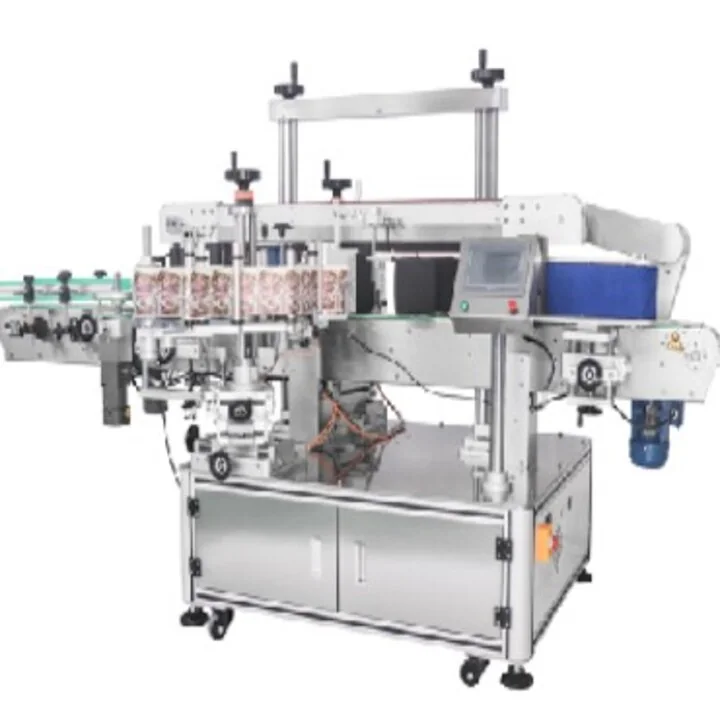
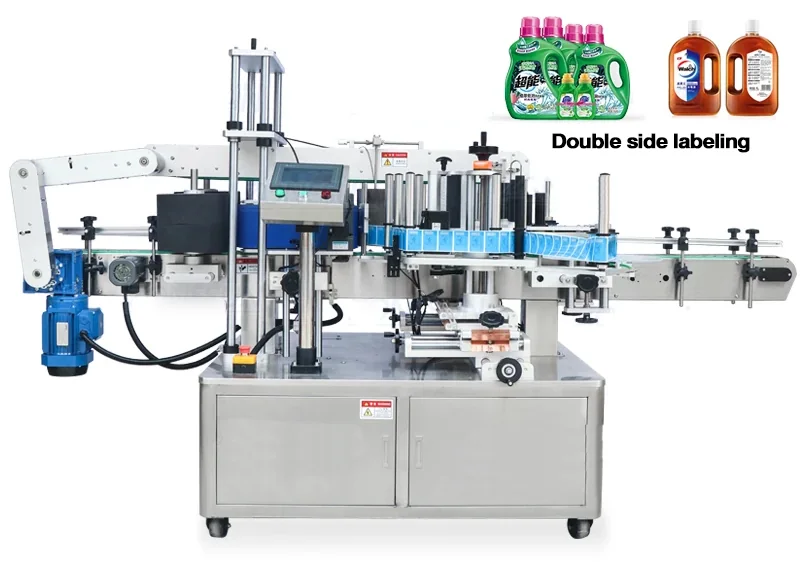
Existing labelling-machine photograph. Agree fixed pack datums and horizontal and vertical placement limits, then measure both labels on production samples.
The compact route can suit short batches, trials, restricted floor space and operations where product loading or discharge is managed around the machine. An automatic inline route should be compared where the required output depends on continuous feed, accumulation, coding, inspection or coordinated speed control with fillers and cappers. The decision should be made from the complete production method rather than footprint alone.
Keep sensors, peel edges, rollers and belts clean; inspect label tracking; verify stored recipes; and check the first packs after every roll or format change.
Record mechanical positions, guide widths, belt pressure, label-head height, sensor threshold and recipe name for each repeat job.
Send a normal range of pack variation and both finished label rolls, not only a drawing or a single perfect container.
Specification questions
Use the published figures as a starting point, then agree how the real application will be demonstrated.
No. The published range is reference data and is explicitly product dependent. Sustainable output must be checked against the real container, label size, product spacing, loading method and required finish.
It is a setup-dependent reference figure. Before acceptance, define the pack datum, horizontal and vertical measurements, operating speed, sample size and the condition of the containers and labels.
Front and back configurations can use separate label heads, allowing different label rolls and positions where the final machine setup supports the application.
Transparent labels may be possible with a suitable sensor. The actual label, liner, adhesive and gap should be trialled because clear constructions vary.
Consider the automatic route when the line requires continuous unattended product feed, higher sustained output, more extensive product handling or closer integration with upstream and downstream equipment.
Return the machine to a known format, change guides, belts, heads and label rolls as required, reload the saved settings and then verify both label positions on a new sample run.
LUB300N test basis
The published LUB300N reference range of approximately 30–100 bottles per minute and the setup-dependent ±2 mm placement reference are useful for initial comparison, but they do not describe every container, label or operator process. The acceptance method should state the exact conditions under which the figures are assessed.
Compact systems are often loaded manually or fed from a short conveyor. The real production rate can therefore be limited by bottle presentation, operator rhythm, product spacing, roll changes or the time needed to keep light containers upright. Record the rate of correctly labelled packs leaving the machine rather than only the conveyor setting.
Where the range contains several bottle sizes, test the least stable pack, the largest label and the most frequent changeover. A machine that performs well on the easiest format may still need different guides, pressure or sensing for the rest of the range.
Placement should be measured from fixed features on the bottle, not from artwork that may move within the label. Record the front and back labels independently in both horizontal and vertical directions. Note the machine speed, container condition, label roll, sample quantity and whether the result follows a cold start, normal running or a completed changeover.
The label placement accuracy guide explains a practical datum and tolerance method that can be used when preparing the trial.
| Test variable | What to document for the LUB300N reference trial |
|---|---|
| Container state | Shape, dimensions, material, filled or empty condition, weight, cap or closure and any normal surface contamination or temperature. |
| Loading method | Manual placement, upstream conveyor or accumulation feed; normal product spacing; and the person or device responsible for orientation. |
| Front and back labels | Dimensions, face stock, adhesive, liner, gap, web width, roll direction, core size and outside roll diameter for each head. |
| Sensing and dispense | Product sensor position, label-gap or clear-label sensor, peel-plate position and wipe-down method used for the test. |
| Output result | Correctly labelled packs per minute over an agreed representative run, with stops, misfeeds and rejected labels recorded rather than excluded. |
| Placement result | Nominal front and back positions, horizontal and vertical datums, allowed tolerance and the measured sample set. |
| Changeover evidence | Settings for a second agreed format, recipe use, mechanical adjustments, tools or format parts and repeat placement after the change. |
A compact machine can be a strong fit for controlled batches and a smaller footprint. An automatic system should also be compared when the wider production method creates requirements beyond the compact setup.
Products arrive directly from filling or capping and require automatic spacing and line-speed coordination.
Multiple regular SKUs require more controlled guide adjustment, recipe management or repeatable format settings.
The project needs barcode, presence or placement checks with a defined reject path and machine-to-machine signals.
The labour objective requires a continuous process rather than regular operator presentation of individual packs.
Production fit
The published 30–100 bottles/min reference is product dependent. A useful trial separates label-head capability from the rate that an operator or upstream feed can sustain with correctly oriented packs.
State whether packs are manually placed, accumulated or transferred from another conveyor. Record normal product spacing.
Include container orientation, replenishing two label rolls, first-off checks and removal of any rejected packs.
Count correctly labelled packs over an agreed run and record stops, misfeeds and recovery rather than quoting only a peak rate.
Compact production
A compact footprint does not remove the need to define operator work, changeover evidence and the path to future automation.
A compact system is useful for frequent changes when the format range can be adjusted without excessive tooling, settings can be recorded, both label rolls are easy to access and the operator can restore the guides and heads consistently. The number of SKUs alone does not prove suitability.
Trial at least one representative changeover between the most different regular formats.
Operator involvement depends on how products are loaded, spaced, collected and checked around the compact labeller. The machine may apply two labels automatically while an operator still presents containers, manages label rolls, clears finished packs and responds to faults.
Define the complete work cycle and sustainable staffing level rather than comparing label-head speed in isolation.
Relocation may be possible, but “compact” should not be interpreted as automatically portable. Confirm the machine mass, safe handling method, support surface, utilities, guarding, access, conveyor interfaces and revalidation required after the move.
The second area should be assessed as an installation in its own right, with the intended products and labels available for setup.
Use production records showing operator time, queueing, changeover frequency, rejected packs, demand peaks and the effect of manual loading on sustainable output. Automatic equipment is justified when controlled infeed, spacing and integration solve a measured constraint rather than simply offering a higher headline rate.
Keep the compact trial data because it provides useful label and pack evidence for the automatic specification.
Compact-route qualification
A compact machine describes footprint and operating approach; it does not automatically decide whether the front and back labels are supplied on one alternating reel or on two independent rolls. Confirm the label architecture, product handling and operator task together.
One web can reduce the number of reels loaded, but the front/back sequence, pitch, artwork orientation and sensor method become controlled label-converter data. A reversed or incorrectly wound reel can place the wrong design on the wrong face.
Separate rolls allow each face to be set individually, subject to the machine's verified head capacity and adjustment range. Changeover must cover both reel paths, sensors, label heights and product positions.
The trial should measure the complete operator cycle and use the bottle in the condition that reaches production. Empty and filled containers can differ in stability, grip and usable output.
Read the one-reel versus twin-head comparison and the before/after filling guide before the machine and label specification are frozen.