Installation condition
Confirm levelling, working height, utilities, guarding interfaces, access and the physical hand-off from upstream and downstream equipment.
Project acceptance guide
A practical acceptance-testing framework for twin-side, top-and-bottom and multi-head labelling projects, from pre-dispatch trials to installed line handover.
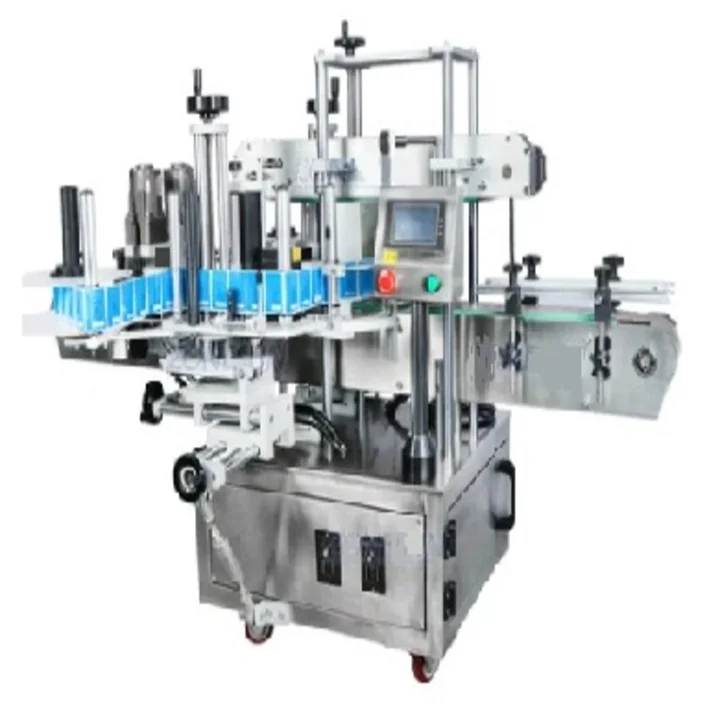
A factory acceptance test (FAT) checks the agreed machine scope before dispatch. A site acceptance test (SAT) checks the installed machine in the buyer’s production environment. The exact protocol should be written for the project: a compact manually loaded labeller needs a different test from an automatic twin-side machine connected to a filler, coder, camera and reject station.
Start with the quotation, user requirement, approved drawings and sample list. Convert each important requirement into an observable result, a measurement method and a pass/fail decision. Avoid vague wording such as “runs well” or “labels accurately”.
The test material should reproduce the labelling-stage condition. Empty bottles may behave differently from filled packs. A temporary artwork sample may not reproduce the final face stock, adhesive, liner, gap or clear-label sensor response.
FAT checklist
| Scope and build | Machine configuration, label heads, sensors, conveyors, guides, hold-downs, coding, inspection, reject equipment and format parts match the agreed scope. |
|---|---|
| Documentation | Approved drawings, operating information, maintenance information, electrical documentation and supplied software or recipe records are identified. |
| Safety functions | Guards, interlocks, emergency stops and safe access are reviewed by competent persons against the project requirements. |
| Dry operation | Conveyors, heads, sensors, HMI, alarms and normal controls operate through the intended sequence without product. |
| Product trial | Representative packs and labels run at the agreed normal condition; correctly labelled output and all faults are recorded. |
| Placement | Front and back labels are measured independently from fixed datums. Skew and visual finish are recorded separately. |
| Starts and stops | First-pack behaviour, restart recovery, product gaps and normal accumulation conditions are demonstrated. |
| Changeover | An agreed second format is set using the intended recipe, tools and parts, then placement is checked again. |
| Fault recovery | Representative alarms, label-out conditions, missed product and downstream stop behaviour are demonstrated safely. |
| Open actions | Every deviation is recorded with an owner, due date and agreed evidence for closure. |
FAT versus SAT
Confirm levelling, working height, utilities, guarding interfaces, access and the physical hand-off from upstream and downstream equipment.
Test line-ready signals, start/stop behaviour, speed relationships, fault signals and the response to upstream or downstream stoppages.
Run production packs and labels under normal factory conditions, including the actual operator loading and product flow.
Repeat the agreed output and placement checks. Record environmental or line effects that were not present during FAT.
Confirm operator setup, changeover, cleaning, alarm recovery and maintenance responsibilities with the intended team.
Close or formally assign remaining actions and keep the signed evidence with the machine record.
Use the placement accuracy guide to define the measurement method, the specification template to confirm the project scope and the sample-trial service page to prepare materials.
Send the agreed pack formats, label specifications, line rate, placement criteria and integration scope. Lancing can help translate the project brief into a practical FAT and SAT sequence.