Bottle handling and orientation
Plan side guides, belts, top control and pack orientation.
Practical answer
Lightweight and flexible bottles can be front/back labelled, but stable handling must be proved without squeezing, rotating or marking the pack.
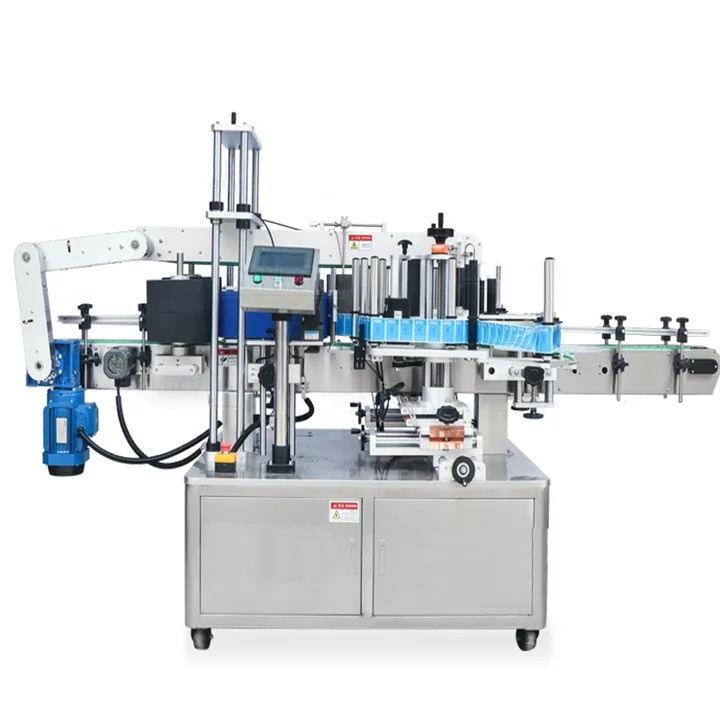
Test bottles at the lightest and heaviest normal fill conditions, with the approved closure fitted. Wall stiffness, moulding variation, temperature and fill distribution can all change the pressure a pack can tolerate.
Include samples from the practical extremes of the production range so guide, belt and wipe-down settings are not based only on the easiest container.
Thin walls can deflect under side pressure, changing the panel position while the label is being presented. A light pack may also lean, bounce or accelerate differently at conveyor transfers. Base flatness, closure mass and the location of the filled product all influence stability.
Check the worst normal bottle, not only the stiffest sample. Moulding variation and temperature can change how much support the pack needs.
Yes, when fill condition affects weight, wall support, temperature or surface cleanliness. An empty bottle may deform under pressure that a filled bottle tolerates, while a heavy filled bottle may create different inertia at guides and stops. If the product is applied to a cold, damp or recently filled container, that condition also matters.
Where the real product cannot be used, agree a safe substitute that reproduces the relevant weight and rigidity, and record the limitation.
Use controlled, broad contact rather than excessive point pressure. Guide positions, side-belt contact zones, belt speed and any top hold-down should support stable areas of the pack. The label should be wiped down progressively without forcing a flexible panel away from its normal shape.
There is no universal pressure setting. Start low, observe pack movement and finish, then document the proven settings for each format.
Consider an alternative when the intended label crosses a moving panel, deep radius, rib or area that cannot be supported consistently, or when closure features prevent safe top control. A smaller label, revised panel, firmer bottle, fixture-assisted process or different application sequence may be more reliable than adding pressure.
The decision should be made from trial evidence and the required visual acceptance standard.
| Observed behaviour | Check first | Evidence to provide |
|---|---|---|
| Panel dents during wipe-down | Contact pressure, label position and bottle rigidity | Filled and empty samples, panel drawing and final label |
| Bottle turns between heads | Guide contact, base stability and belt-speed relationship | Video of normal line feed and representative closure |
| Pack leans at transfer | Base flatness, centre of mass and conveyor transition | Worst-case filled samples and line-height details |
| Label edges lift after release | Panel geometry, surface condition and adhesive match | Production label construction and cleaned/normal packs |
Related answers
Use the most relevant next page rather than treating one answer as the complete machine brief.
Plan side guides, belts, top control and pack orientation.
Review material, panel and format considerations for plastic packs.
Define the samples and evidence needed before final specification.
Send container photographs or drawings, both label specifications, the target output and details of the surrounding line. Lancing can confirm the most suitable machine route and the evidence needed for a sample trial.