How to choose a front/back labeller
Start with container shape, label material and output requirement.
Technical guide
Accurate label placement depends on the container, the label, the sensor setup and how consistently the pack travels through the machine.
A label can only be placed accurately if the pack is controlled accurately. Containers that twist, lean or bounce on the conveyor will create inconsistent finished labels.
Side guides, top hold-down belts and product spacing all influence repeatability.
Label position also depends on reliable label feed and edge detection. If the sensor struggles to detect the gap or label edge, placement can vary.
Clear, reflective or unusual labels should be checked before the machine is finalised.
Higher speeds can make small setup issues more visible. A machine that performs well at a slow demonstration speed should also be reviewed against the real production target.
Acceleration, bottle spacing and wipe-down pressure can all affect label alignment.
Repeatability improves when format settings are documented, operators are trained and changeovers are managed consistently. This matters especially where several pack sizes share one labeller.
Related routes
Use these pages to compare nearby machine routes, applications and buyer guides.
Start with container shape, label material and output requirement.
Choose the automation level that matches speed, footprint and budget.
Ask Lancing UK to check the best route for your pack.
Quick answers
Common causes include poor container control, wrong guide settings, sensor issues, label roll variation and excessive speed for the setup.
Yes, if the sensor cannot reliably detect the label edge or gap.
Yes. Trials with real containers and labels can reveal accuracy issues before purchase.
Send pack photos, label sizes, target speed and current line details. Lancing UK can help shortlist the best front/back labelling machine route.
Measurement method
A placement figure is meaningful only when the nominal position, datum, direction of measurement, sample size and machine condition are stated.
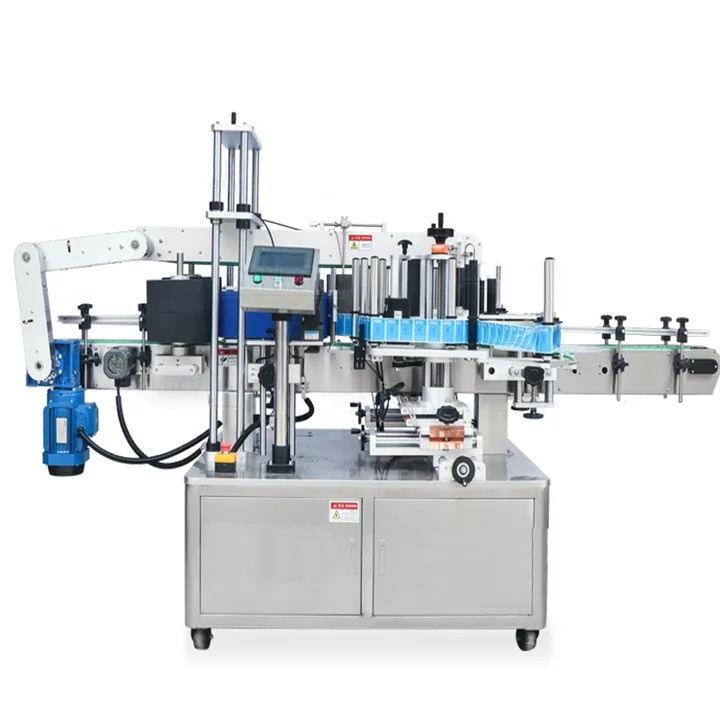
Accuracy describes how close the average position is to the nominated target. Repeatability describes how tightly repeated labels group around their achieved position. Visual finish covers skew, wrinkle, bubbles, edge lift and whether the label follows the intended panel.
A machine can repeat a position consistently but still be offset from the artwork target, or meet the dimensional position while producing poor visual finish. Record both dimensional and presentation checks.