Before the labeller
Check infeed conveyor height, product spacing, filling or capping stability, cap height and whether products need time to settle before labelling.
Line integration guide
A labeller rarely operates in isolation on a production line. The correct specification should consider how bottles or packs arrive, how they leave, and what other equipment must share the same production flow.
Check infeed conveyor height, product spacing, filling or capping stability, cap height and whether products need time to settle before labelling.
Confirm label placement, sensor method, top hold-down, side guide pressure, rejection or inspection points and operator access.
Plan coding, barcode checks, accumulation, packing and any requirements for reject handling or quality control.
Next step
The most useful enquiries include the physical pack, label roll details, target output and any existing equipment the labeller must sit between. This helps avoid unsuitable machinery suggestions and makes the quote route faster.
Related guides
Choose the right machine route.
Prepare the details needed for a faster quote.
Compare automation levels.
Plan sensors and material checks.
Send your pack details to Lancing UK and we will help match the right labelling route.
Inspection interface
Where the line includes camera inspection, barcode verification or printed-data checks, the integration scope must cover the complete pack-tracking and fault response rather than only a camera mounting point.
Keep the correct product identity through the camera zone, conveyor gaps and downstream devices.
Define the reject method, full-bin response, loss-of-air response and any positive reject confirmation.
Agree what happens when inspection is unavailable, a product cannot be rejected or the downstream line stops.
Production sequence
The label point should be selected from the condition of the bottle that reaches it. Moving the labeller before or after filling and capping changes container rigidity, surface cleanliness, closure clearance, conveyor control and the timing of inspection.
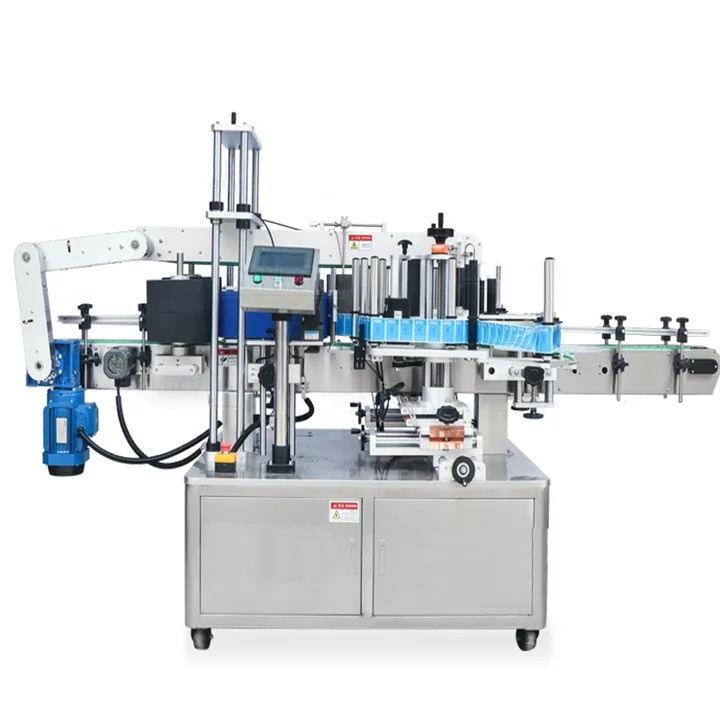
| Before filling | Test empty-pack stability and confirm the applied labels will survive later filling, capping and transfers. |
|---|---|
| After filling | Test the real weight, wall behaviour and any surface contamination or temperature change. |
| After capping | Test the complete sealed pack and confirm closure clearance through guides and hold-down devices. |