Top application
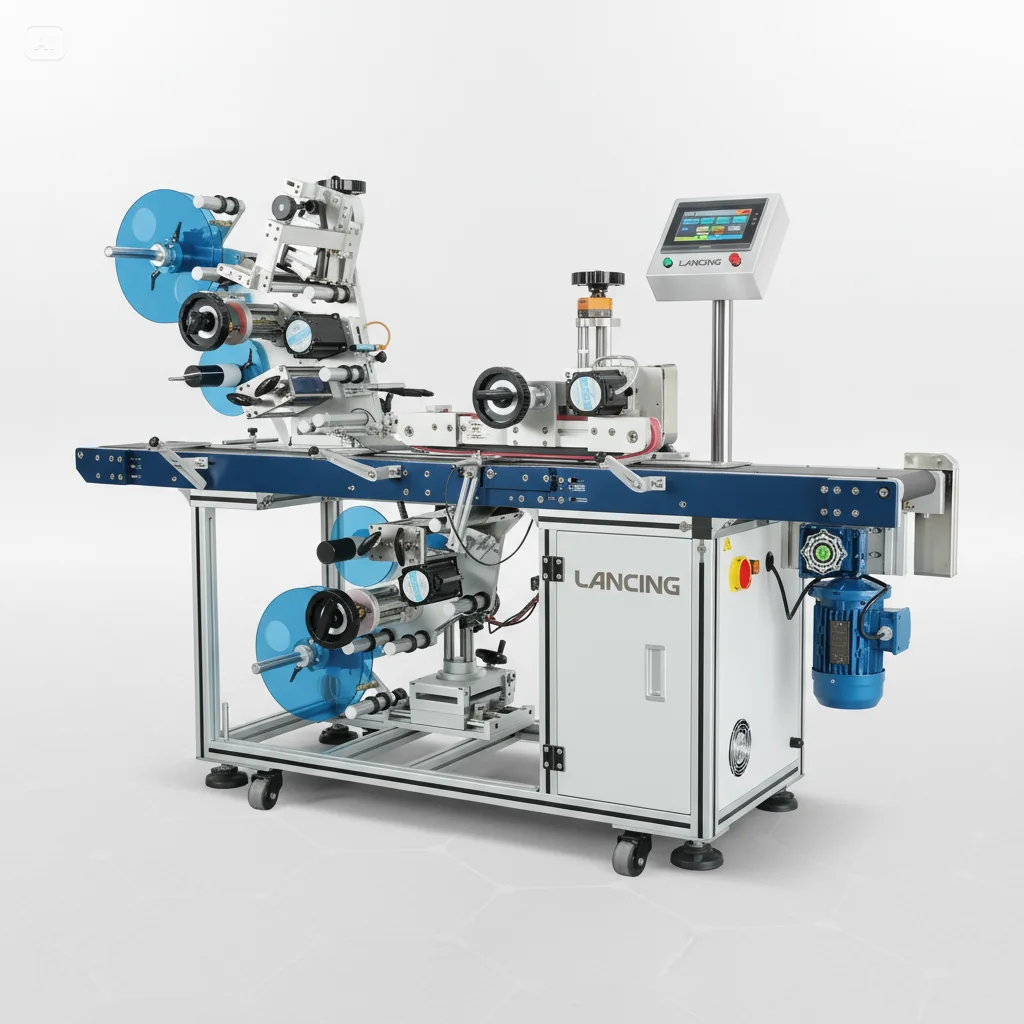
Top labels can be applied to cartons, sleeves and flat packs where presentation needs to stay consistent.
Carton and flat-pack labelling
Flat products such as cartons, trays, sleeves and boxes often need top, bottom or side labelling instead of bottle-style front/back application. The machine should be selected around product support, conveyor width and label location.
Selection points
Top labels can be applied to cartons, sleeves and flat packs where presentation needs to stay consistent.
Bottom labelling may require product transfer support or split conveyor design depending on pack type.
Output depends on product length, required spacing, label size and detection method.
Related routes
Use these pages to compare similar pack formats and label application routes.
Front and rear labels on flat and rectangular containers.
Controlled labelling for shaped and oval packs.
Separate front and back labels rather than full wraparound.
Top, bottom and face labelling for flat products.
Send your pack dimensions, label size, label material and output target. Lancing UK can help shortlist the most suitable front/back labelling route.
For cartons, trays and flat packs, draw the intended conveyor position and mark each labelled face. Identify whether the pack is open, closed, empty or filled at that point. The surface being labelled and the surfaces available for support should both be visible in the enquiry.
Where an underside label is required, ask the proposal to show the transfer arrangement through the application point. Include lightweight, flexible or uneven packs in the sample discussion. The trial should demonstrate the full approach and exit rather than only the moment when the label touches the surface.
No. Ask for a configuration based on the carton presentation, labelled faces and support needs. The required top, bottom or side application should be described explicitly in the quotation and demonstrated with the production pack.