Separate labels
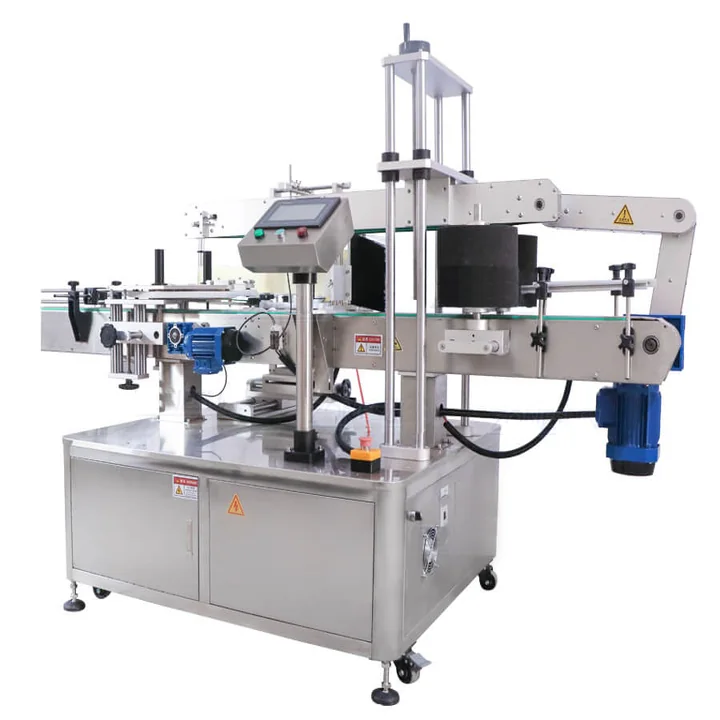
Two label reels can apply branding and information labels to opposite areas of the bottle.
Round bottle front/back
Some round bottles need separate front and rear labels rather than one full wraparound label. The correct machine route depends on label length, bottle diameter, required spacing and whether orientation marks are required.
Selection points
Two label reels can apply branding and information labels to opposite areas of the bottle.
Correct machine setup helps keep the gap between labels consistent around the bottle.
Handling method depends on whether the bottle must rotate during application or remain controlled between belts.
Related routes
Use these pages to compare similar pack formats and label application routes.
Front and rear labels on flat and rectangular containers.
Controlled labelling for shaped and oval packs.
Separate front and back labels rather than full wraparound.
Top, bottom and face labelling for flat products.
Send your pack dimensions, label size, label material and output target. Lancing UK can help shortlist the most suitable front/back labelling route.
Round-bottle route selection
A round bottle can carry two discrete labels, one continuous wraparound label or a more complex registered layout. Those finishes require different product motion and label supply, even when the bottle diameter is unchanged.
| Two labels on one alternating reel | The bottle is held or rotated while the applicator dispenses the front and back designs in sequence. Confirm the leading label, pitch, gap and angular relationship. |
|---|---|
| Two labels from independent heads | Separate rolls can support independent label settings, but the bottle must be oriented and controlled so both heads apply to the intended faces. |
| One wraparound label | A continuous label around a cylindrical pack belongs to a wraparound application rather than a twin-side front/back layout. |
A seam, embossing, cap feature, existing mark or vision-detectable feature may be used to establish orientation where the application requires it. The usable datum and sensor response should be proven with production samples.
For alternating labels, the reel is part of the machine recipe. For twin heads, each roll has its own winding, sensor and position settings. Compare both routes in the single-roll versus twin-head guide.
A round bottle with separate front and rear labels needs a clear positional reference. State whether the labels simply oppose each other or must also align with a seam, embossed mark, cap feature or pourer. Provide a marked sample showing the relationship you expect around the circumference.
Ask the proposal to explain how the label sequence is produced for your chosen roll arrangement. Where front and rear labels differ, keep their sizes, roll references and sensing requirements separate. Include the shortest and longest label combinations in the trial discussion.
Not every job requires alignment to a seam. Define whether only the two labels must align with each other or whether a bottle feature also matters, then ask the supplier to demonstrate the proposed positioning method.