Two faces in one pass
Front and rear labels can be applied without a separate manual handling step.
Double sided labelling
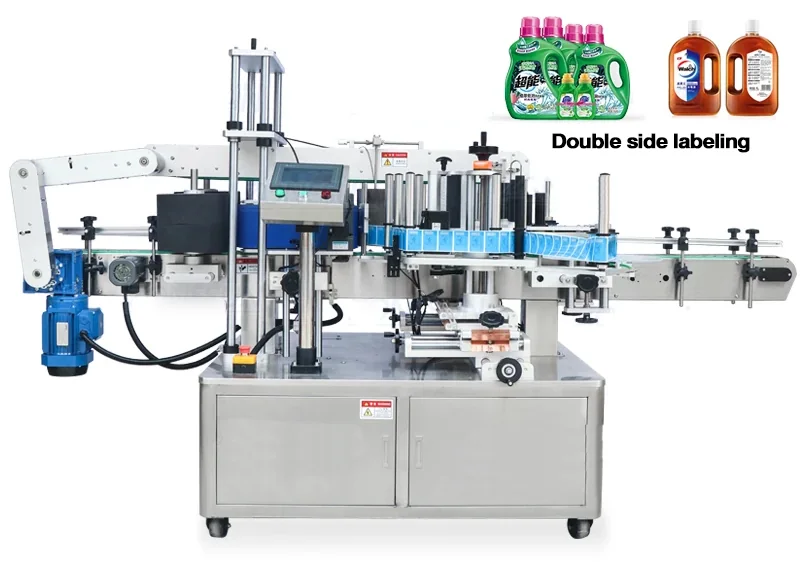
A double sided label applicator is designed to apply labels to two faces of a product in one controlled pass. It is commonly used when a pack needs a display label on the front and an ingredients, barcode, warning or information label on the back.
Selection intent
The key difference between a simple label applicator and a reliable double sided system is product control. The machine must present both faces consistently before the labels are wiped down.
Label material, backing web, gap, transparency and the product face all affect sensor choice and setup time.
Front and rear labels can be applied without a separate manual handling step.
Paper, film and transparent labels may need different sensor options.
Infeed, outfeed, coding and inspection should be planned together.
Machine routes
Most projects start with the pack shape, label position, material and output. These are the core machine routes to compare before requesting a quotation.
Best for established production where two labels need to be applied consistently in one pass.
Useful for smaller footprints, lower-volume production, trials and fast SKU changes.
Useful for flat packs, cartons, trays, sleeves and products requiring label application to upper and lower faces.
Quote preparation
A good double sided applicator enquiry includes pack drawings, label artwork, label reel direction and an estimate of the hourly or per-minute output required.
Where there are multiple SKUs, include the smallest and largest container plus the most difficult label. This helps avoid specifying a machine around only the easiest format.
Related pages
These pages help connect the search route with machine type, application and buying guide intent.
Bottle projects needing two separate labels.
Planning for film and transparent labels.
How to think about tolerance and repeatability.
Main product route for label applicator buyers.
The useful starting details are container dimensions, label size, label material, output target, photos of the pack and whether the labelling machine needs to connect with filling, capping, coding or inspection equipment.
Yes. Lancing UK can compare compact, automatic, twin-side and top/bottom labelling options against the pack, label material, changeover needs and output target.
Yes. Samples, drawings, label artwork and short videos of the current process help confirm handling risks before a final machine recommendation is made.
Share the pack, label material, output target and any integration requirement. The team can help you compare the most suitable compact, automatic or top/bottom labelling route.
Machine selection
A double-sided label applicator normally uses two independent heads to apply separate labels to opposite faces in one conveyor pass. The complete machine must also space, orient and stabilise the product so both labels meet the agreed placement and finish.
Each head needs the correct label width, length, roll capacity, sensor and adjustment range. Unequal front and back labels should be specified separately rather than treated as one common roll format.
Guides, side belts, top hold-down devices or other handling methods keep flat, oval and shaped packs aligned while both labels are dispensed and wiped down.
Product detection, spacing, coding, inspection, reject and upstream or downstream signals determine whether the applicators operate as a stand-alone machine or an integrated line stage.
The two target faces define the route. Separate labels on opposite vertical faces use a twin-side system; labels on the upper and lower faces use a top and bottom labeller. A single continuous label around a cylindrical bottle belongs on a wraparound route.
Use representative samples and label rolls to confirm the handling and applicator-head arrangement.