Automatic twin side labeller
View the automatic twin-side machine route.
Machine route
A front and back label applicator applies labels to two faces of the same pack, helping keep branding, ingredients, barcodes and product information consistent.
A front/back label applicator applies separate labels to opposing faces of a product. It is commonly used for flat, oval, square and rectangular bottles where front branding and rear product information need to remain separate.
The machine route can be compact or automatic depending on output and line integration.
Front/back label applicators are used across cosmetics, food, beverage, household, chemical and contract packing projects. The common requirement is clean two-face labelling with reliable repeatability.
The final specification depends on container shape, label size, label material, label position, output target and the wider line. Clear labels, unusual pack shapes and coding requirements should be flagged early.
Lancing UK can help shortlist compact, automatic and top/bottom labelling routes based on pack photos, label details and production targets.
Related routes
Use these pages to compare nearby machine routes, applications and buyer guides.
View the automatic twin-side machine route.
View the compact route for lower-volume projects.
Send pack and label details for a recommendation.
Quick answers
The terms are often used together. A label applicator applies labels, while a labelling machine may include additional handling, conveyors and controls.
Twin-side machines use two label heads to apply front and back labels in one pass.
Clear labels can be applied when the correct sensor and setup are chosen.
Send pack photos, label sizes, target speed and current line details. Lancing UK can help shortlist the best front/back labelling machine route.
Complete applicator system
A practical front and back label applicator includes product transport, orientation, sensing, dispense control and wipe-down as well as the two applicator heads. The complete system should be described around the pack and surrounding line.
The two labels can differ in size, material and vertical position. Each head is adjusted independently, but both applications rely on the same container being presented consistently. Guides, side belts and any top restraint should reference a stable part of the pack and avoid crushing or rotating it.
Provide the roll specification for each label, including core, outside diameter, backing width, gap and winding direction. Transparent labels should be identified before sensor selection. If a barcode, batch code or inspection camera is involved, mark the required orientation and clear field on the drawing.
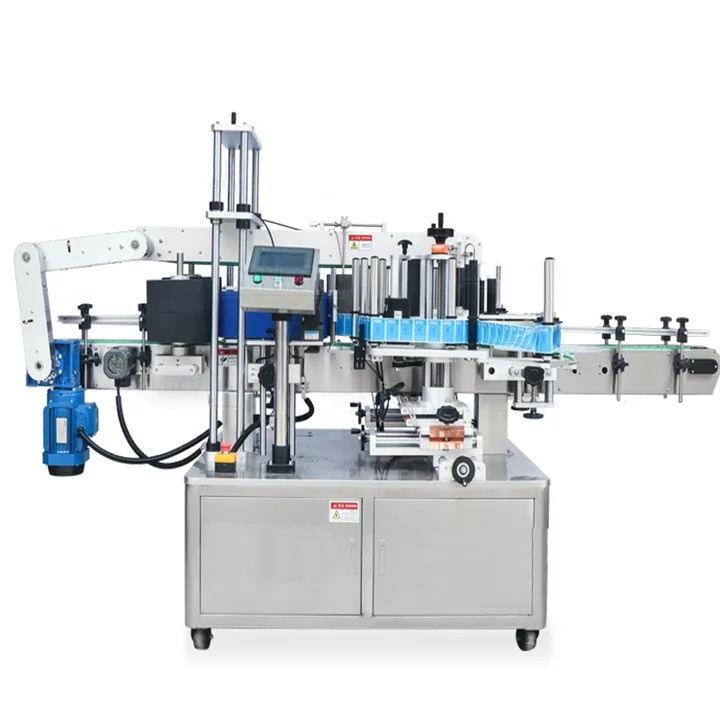
Existing labelling-machine photograph. Supply the core size, outside roll diameter, web width, label dimensions, gap and winding direction for each label roll.
Start with application facts: container shape, label positions, sustainable output, changeover frequency, available floor space and integration. Then compare a compact twin-side labeller with the automatic twin-side route. A round pack needing one continuous label should be redirected to wraparound labelling machinery; a carton or tray needing upper and underside labels should be considered against the top and bottom labeller.
Specification questions
These additional questions cover independent labels, measurement and difficult container shapes.
Yes, separate label heads can be set for different rolls and positions, subject to the final applicator and product-handling arrangement.
Define a repeatable datum on each face, the horizontal and vertical measurements, normal running speed and the number of packs to be checked.
Taper and flexibility change the contact path and side pressure. Representative filled samples and finished labels should be trialled before final configuration.