Pack control
Guides, belts and hold-downs should be chosen around the product shape.
Barcode label application
Barcode labels require consistent position and scannability. The applicator should be configured around label size, print/coding needs, pack orientation and inspection requirements.
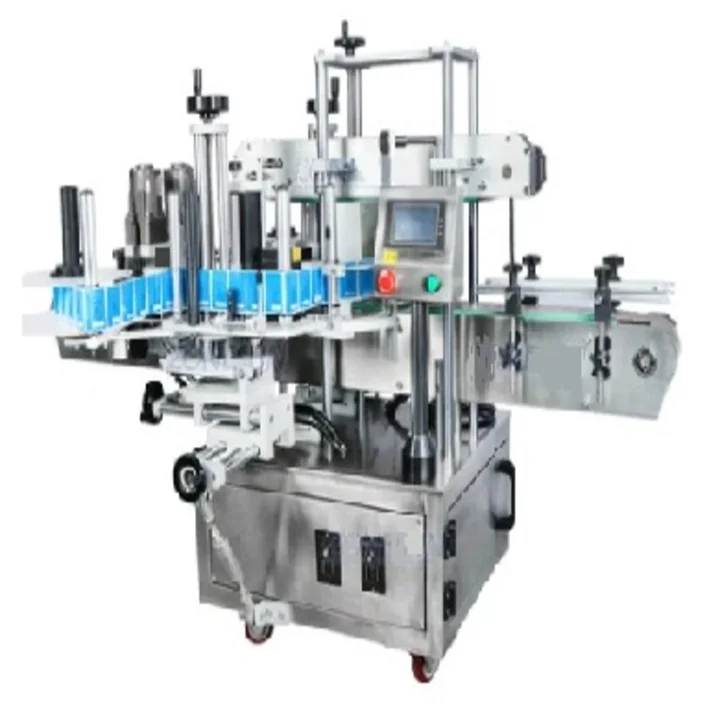
Selection intent
The application route should start with the real product, not a generic machine name. Shape, height, width, weight, surface finish and stability all influence how the pack travels through the labelling station.
The label material also matters. Paper, film, clear labels and textured stocks can require different sensing and wipe-down methods.
Guides, belts and hold-downs should be chosen around the product shape.
Paper, film and clear labels may need different setup and sensors.
The machine should match the realistic production rate and changeover pattern.
Machine routes
Most projects start with the pack shape, label position, material and output. These are the core machine routes to compare before requesting a quotation.
Best for established production where two labels need to be applied consistently in one pass.
Useful for smaller footprints, lower-volume production, trials and fast SKU changes.
Useful for flat packs, cartons, trays, sleeves and products requiring label application to upper and lower faces.
Quote preparation
For this application, include product dimensions, photos, label artwork, label stock and details of the current or planned line speed.
Where several pack sizes are involved, send the extremes of the range plus any awkward packs. The most difficult pack often determines the correct handling setup.
Related pages
These pages help connect the search route with machine type, application and buying guide intent.
Automatic front/back route for production.
Compact route for smaller sites.
Control label position and tolerance.
Details to send with a quote request.
The useful starting details are container dimensions, label size, label material, output target, photos of the pack and whether the labelling machine needs to connect with filling, capping, coding or inspection equipment.
Yes. Lancing UK can compare compact, automatic, twin-side and top/bottom labelling options against the pack, label material, changeover needs and output target.
Yes. Samples, drawings, label artwork and short videos of the current process help confirm handling risks before a final machine recommendation is made.
Share the pack, label material, output target and any integration requirement. The team can help you compare the most suitable compact, automatic or top/bottom labelling route.
Barcode face planning
A barcode label applicator must do more than dispense a label containing a code. The finished pack needs the approved code on the correct face, inside a scannable area, with the required quiet zone, contrast and placement tolerance.
State the barcode type, encoded fields, artwork version and whether the data is static, batch-specific or serialised. Identify who approves and releases the production job.
Use a pack drawing or photograph to define the label face, orientation and acceptable movement. Avoid seams, corners, tight curves and areas hidden by the closure or secondary packaging.
Separate label presence, decoded data, artwork identity, readability, placement and formal print-quality verification. Each is a different requirement and may need different equipment.
For emerging retail projects, use the GS1 2D barcode label placement and verification guide. It explains QR Codes with GS1 Digital Link, GS1 DataMatrix, Ambition 2027, inspection and reject planning without treating 2027 as a universal removal date for linear barcodes.