Useful
Useful for bottles, jars, sauces, condiments, beverages and food containers.
Food and drink labelling
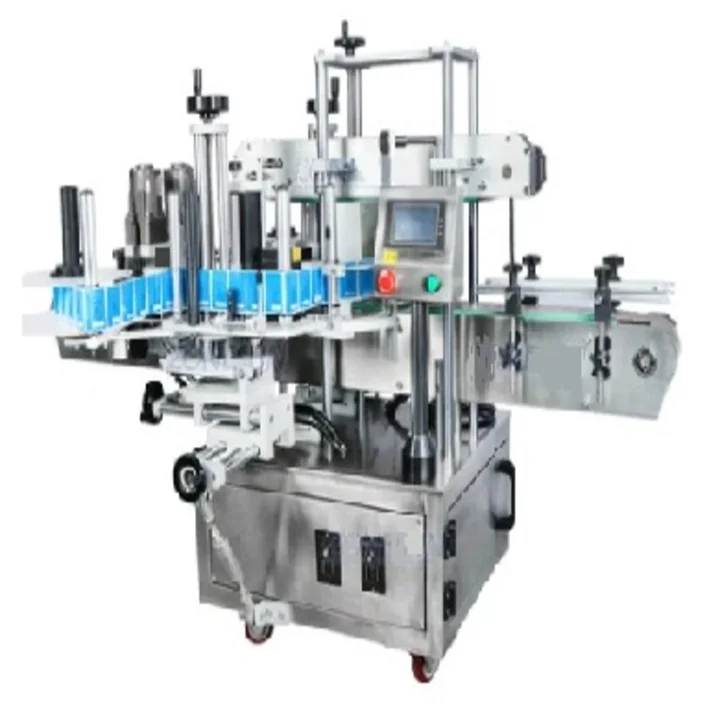
Food and drink packs need reliable label positioning, readable information panels and practical washdown or hygiene planning where required. Front/back labelling machines can apply brand and ingredient labels in one line pass.
Project checks
Useful for bottles, jars, sauces, condiments, beverages and food containers.
Label placement should account for curves, tapers, seams and filled product weight.
Date coding, batch coding and barcode inspection can be integrated into the line.
Machine selection should include changeover requirements for different SKUs.
Machine route
Lower-volume or mixed-SKU work may suit a compact twin-side labeller, while continuous production normally needs an automatic front and back labelling machine with conveyor control. Where filling, capping, coding or inspection sits nearby, line integration should be included in the first brief.
Representative bottles, jars, cartons and labels help confirm application method.
Output target affects the correct machine format and conveyor arrangement.
Tell us your product type, pack shape, label size, output target and current production process.
Food and drink pack qualification
Food and drink applications can be affected by product temperature, condensation, oil or sauce residue, glass variation and frequent recipe changes. The labeller should be assessed with the pack condition that reaches the line in normal production.
Cold-filled, chilled or recently washed packs may reach the labeller with surface moisture. Confirm the label adhesive and the point at which the container is dry enough for reliable application.
Product around the neck, closure or label panel can reduce adhesion and contaminate handling components. Define upstream filling, capping and wipe-down checks as part of the labelling process.
Nominally identical glass packs can vary in seams, panel geometry and base stability. Representative samples should include the normal production variation rather than only ideal reference containers.
Front branding, rear ingredient or product information, date coding and barcodes must fit the usable panel and remain readable after application. Confirm whether variable data is printed before application, directly onto the label, or onto the finished pack.
Use the coding integration guide and the vision and reject guide to define what the line must check.
| Sauce and condiment bottles | Confirm viscosity-related residue, bottle squeeze, tapered panels and the normal wipe-down condition after capping. |
|---|---|
| Oil bottles | Confirm surface cleanliness, adhesive compatibility, bottle stability and any drip-control step before labelling. |
| Drinks bottles | Confirm temperature, condensation, bottle shape, label material and the upstream spacing from filling or capping. |
| Jars | Confirm glass variation, lid geometry, front and back panel availability and whether a wraparound route would better suit a cylindrical pack. |
Provide representative filled containers and production label rolls so the machine route can be checked against real adhesion, handling and coding requirements.