Supports
Supports multi-SKU work across bottles, jars, cartons and flat containers.
Contract packing
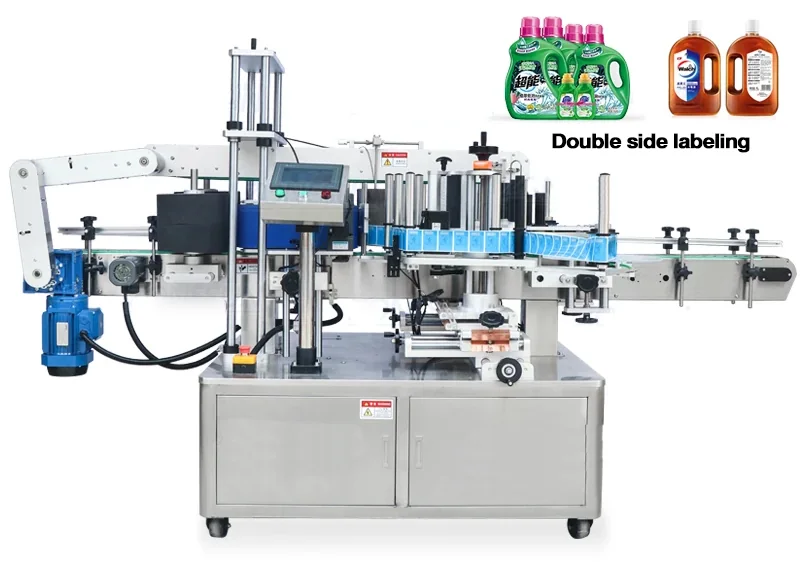
Contract packers need front/back labelling machinery that can change between products quickly and cover different pack shapes, label sizes and production volumes. The right route depends on the range of jobs rather than one container alone.
Project checks
Supports multi-SKU work across bottles, jars, cartons and flat containers.
Repeatable settings help reduce setup time between customer projects.
Compact or automatic machinery can be selected around throughput and floor space.
Sample testing helps confirm the machine route before committing to a specification.
Machine route
Lower-volume or mixed-SKU work may suit a compact twin-side labeller, while continuous production normally needs an automatic front and back labelling machine with conveyor control. Where filling, capping, coding or inspection sits nearby, line integration should be included in the first brief.
Representative bottles, jars, cartons and labels help confirm application method.
Output target affects the correct machine format and conveyor arrangement.
Tell us your product type, pack shape, label size, output target and current production process.
Multi-SKU production
Contract packing places more emphasis on format range, controlled changeovers, label verification and traceable setup records. The machine must be evaluated against the difficult combinations in the expected customer portfolio, not only the first pack to be launched.
List the confirmed containers and realistic future extremes. Check conveyor width, guide travel, head position, label capacity, side-belt range and any format parts needed for the smallest, largest, lightest and least stable packs.
Record mechanical settings as well as HMI recipes. Guide positions, belt pressure, head height, peel-plate position and sensor settings must be reproducible when a job returns after several weeks.
Multiple customers and SKUs increase the risk of the wrong label roll or artwork being loaded. Define roll identification, barcode checks, line clearance and reject handling before selecting the inspection scope.
| Operational question | Evidence to retain |
|---|---|
| Can the format be changed repeatably? | Setting sheet, recipe name, format-part list, photographs and a verified first-off pack. |
| Is the correct label loaded on each head? | Roll identification method, artwork check, barcode or vision requirement and line-clearance record. |
| Can the line recover after a stop? | Restart sequence, label queue behaviour, pack tracking and disposition of products between inspection and reject. |
| Can a new customer pack be qualified efficiently? | Sample-submission standard, trial record, placement datum, approved label rolls and acceptance criteria. |
A machine described as adjustable may still need new guides, tooling, sensors or head travel for future packs. Include the credible format envelope during the original review, while keeping unsupported “all sizes” assumptions out of the quotation.
The front and back labeller specification template helps define the format range and interfaces.
A useful trial should leave more than a labelled sample. Retain the material references, machine settings, placement measurements, approved defects, operator sequence and changeover notes so the job can be reproduced later.
See label trials and sample testing and the documentation handover checklist.
Send the confirmed and likely pack formats, label-roll data, changeover expectations and inspection requirements for a structured machine review.