Label roll specification guide
Capture dimensions, gaps, cores and winding for both rolls.
Practical answer
Different label lengths are handled as two independent applications whose timing must both fit within the same product movement and spacing.
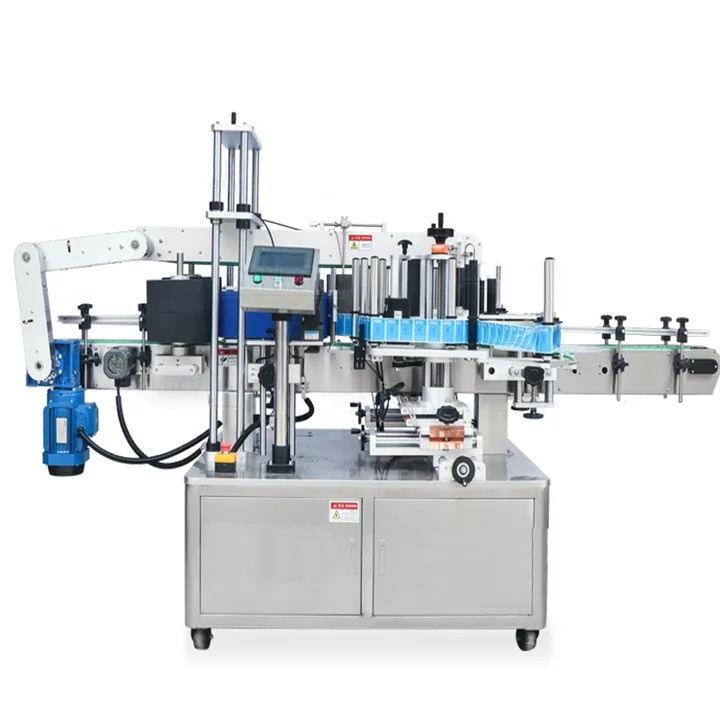
The front and back heads may require different roll data, sensor settings, dispense timing, wipe-down travel and placement offsets. The shared conveyor condition must still allow both tasks to finish before the next product enters the control zone.
Supply both production rolls and define the two target datums independently, then assess the combined cycle under the intended product gap.
Not always, but a longer label can require more web movement, dispense time and wipe-down contact. Whether that becomes the line limit depends on head performance, product gap, conveyor speed, label material and the available application distance.
Use a representative continuous run to identify the true constraint instead of calculating output from label length alone.
They may, provided each head and sensor are suitable for its own construction. One side might use paper while the other uses film or clear material, creating different release, tension, sensing and finish requirements.
Record and test the rolls independently; a successful front-label setup is not evidence that the back-label roll will behave the same way.
Choose a repeatable container datum for each face and define the target edge, centreline or feature relationship for that label. Do not rely on visual centring if the panels, artwork or label sizes differ.
Measure front and back separately, then add a combined visual check for the finished pack and any barcode or regulatory panel requirements.
Record each roll identity, label length and width, gap, liner, winding direction, sensor method, dispense setting, target datum, wipe-down and measured placement. Then record the combined product gap, speed, starts, stops and any downstream contact.
The report should identify which side sets the sustainable limit and whether changing one roll affects the other.
| Front-head record | Back-head record | Combined-line record |
|---|---|---|
| Roll construction and dimensions | Roll construction and dimensions | Minimum product gap and normal speed |
| Sensor and stop position | Sensor and stop position | Starts, stops and gap recovery |
| Target datum and tolerance | Target datum and tolerance | Finished-pack visual relationship |
| Wipe-down and finish | Wipe-down and finish | Downstream label contact and inspection |
Related answers
Use the most relevant next page rather than treating one answer as the complete machine brief.
Capture dimensions, gaps, cores and winding for both rolls.
Define separate datums and tolerances.
Test the side that sets the sustainable cycle.
Send container photographs or drawings, both label specifications, the target output and details of the surrounding line. Lancing can confirm the most suitable machine route and the evidence needed for a sample trial.