Clear-label guide
Review label construction, sensing and finish.
Practical answer
Clear labels can be applied to clear bottles, but the label web and the transparent product must be detected and validated as separate sensing tasks.
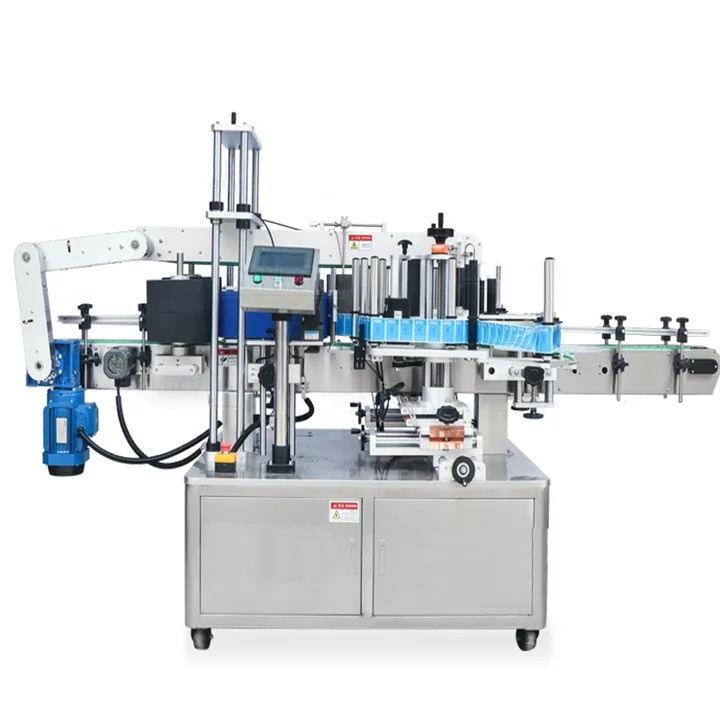
Clear-label performance depends on the face material, liner, adhesive, print and varnish together with the bottle, contents, reflections and production lighting. A visually similar prototype may behave differently at the sensor or wipe-down point.
Use production-equivalent rolls and closed packs, then test label-web detection, product detection and finished appearance as separate acceptance checks.
The label sensor monitors the moving label web to find each label edge or gap. The product sensor detects when a bottle reaches the application point. Transparent materials can reduce contrast in both locations, but the optical path, background and required timing are different.
Specify and test both functions independently, including gaps in the product flow and normal variation in the label roll.
Supply the final or production-equivalent bottle, closure, contents or fill substitute, both label rolls, liner, print, varnish and adhesive construction. Include normal bottle colour variation and any embossed marks or seams that pass the sensor.
A plain clear prototype on a different liner can support early handling checks but may not prove reliable detection or final appearance.
Clear material makes dust, condensation, fingerprints, trapped air and adhesive wet-out variation visible through the label. These issues may be cosmetic even when placement is dimensionally correct.
Define the normal bottle-cleaning and handling condition before the trial, then inspect the finish under representative lighting rather than only at the machine.
Define whether the inspection must detect label presence, edge position, skew, bubbles, print, code or another defect. Transparent edges can disappear against a clear or reflective background, so lighting and camera angle are part of the test.
Challenge the system with known good and known defective samples and verify the complete reject path, not only the image on the camera screen.
| Task | Main variables | Evidence |
|---|---|---|
| Label-web detection | Face material, liner, gap, print and web tension | Production-equivalent roll including normal splices |
| Product detection | Bottle transparency, contents, reflections and background | Closed packs across normal colour and fill variation |
| Application finish | Surface cleanliness, panel geometry and wipe-down | Visual standard agreed under representative lighting |
| Inspection and reject | Defect definition, camera view and pack tracking | Challenge set with confirmed reject outcome |
Related answers
Use the most relevant next page rather than treating one answer as the complete machine brief.
Review label construction, sensing and finish.
Separate label-web and product-detection requirements.
Plan inspection scope and failed-pack handling.
Send container photographs or drawings, both label specifications, the target output and details of the surrounding line. Lancing can confirm the most suitable machine route and the evidence needed for a sample trial.